
Last updated: May 11, 2026
Your face is unlike anyone else’s – and your facial treatment plan should reflect that. As demand for natural-looking aesthetic results continues to grow in 2026, the gap between generic procedures and truly customized facial treatments has never been more apparent. This guide explains how anatomy-based, personalized treatment planning delivers superior outcomes and why it matters for patients at every stage of the aging process.
What Are Customized Facial Treatments and Why Do They Matter?
Customized facial treatments are an approach where every procedure, product, and technique is selected based on a patient’s unique facial anatomy, skin type, aging pattern, and aesthetic goals – rather than a one-size-fits-all protocol. This matters because the face contains multiple independent anatomical compartments that age at different rates, making uniform treatment approaches clinically inadequate.
A landmark study by Rohrich and Pessa established that subcutaneous facial fat is partitioned into multiple independent compartments, each requiring compartment-specific treatment rather than blanket correction. This foundational research, published in Plastic and Reconstructive Surgery, changed how clinicians approach facial rejuvenation by demonstrating that the face does not age uniformly.
Nearly 1.6 million cosmetic surgical procedures were performed in the United States in 2024, alongside 28.2 million noninvasive procedures, according to the American Society of Plastic Surgeons (ASPS) 2024 Procedural Statistics Report. Yet outcomes vary dramatically based on whether treatment was matched to individual anatomy or applied generically. Customization is the variable that separates satisfying results from disappointing ones.
How Does Facial Anatomy Vary From Person to Person?
The face is composed of five distinct tissue layers: bone, ligaments, muscles, fat pads, and skin. A 2025 study in the Aesthetic Surgery Journal outlined a multimodal 5-layer facial rejuvenation protocol that systematizes treatment based on these individual layers. Each layer ages independently and responds differently to treatment, meaning two patients of the same age can require entirely different approaches.
Gender adds another dimension of variability. According to a comprehensive literature review on facial bone aging published through PubMed Central, women experience accelerated postmenopausal bone loss in the midface and periorbital regions, while men undergo more gradual skeletal remodeling over time. Bone structure, fat pad distribution, skin thickness, and muscle tone all differ substantially between individuals – and these differences dictate which treatments will produce the best results.
Why Do Generic Facial Procedures Often Produce Unnatural Results?
The fear of looking “overdone” is one of the most common concerns patients express during consultations. This outcome typically occurs when treatments ignore individual bone structure, fat compartment volume loss, and skin quality. Addressing surface-level concerns without evaluating the underlying skeletal foundation produces results that appear artificial precisely because they are structurally incomplete.
Research supports this concern with hard data: comprehensive skeletal-inclusive facial rejuvenation improved aesthetic outcomes by 34% compared to soft-tissue-only treatment (p < 0.001), with 94% patient satisfaction and 5-year durability, according to a peer-reviewed facial bone aging study hosted on PubMed Central. A panel of board-certified cosmetic surgeons from the American Board of Cosmetic Surgery confirmed this shift, noting that “early proactive surgery over fillers and biological techniques for natural healing – including nanofat, PRP, and exosomes – represent the shift toward regenerative, individualized aesthetic medicine.”
Why Is a Personalized Facial Treatment Plan More Effective Than Choosing Individual Procedures?
A personalized facial treatment plan treats the face as an integrated system rather than a collection of isolated concerns. Selecting procedures from a menu without understanding how each facial layer interacts leads to fragmented results, while a coordinated plan addresses the root causes of aging across bone, ligaments, muscles, fat pads, and skin simultaneously.
The 2025 Aesthetic Surgery Journal study on multimodal treatment layering demonstrated that systematized protocols addressing all five facial layers produce outcomes that single-modality treatments cannot replicate. This is because volume loss in one compartment affects the appearance of adjacent areas – treating the undereye without addressing midface volume, for example, often produces a hollow or unbalanced look.
At La Belle Vie Cosmetic Surgery Clinic in Seattle, Dr. Tony Mangubat and his team begin every patient relationship with comprehensive facial analysis before any procedure recommendation is made. This anatomy-first philosophy ensures that treatment plans are designed around what each patient’s face actually needs, not what is trending on social media.
What Does an Anatomy-First Consultation Look Like?
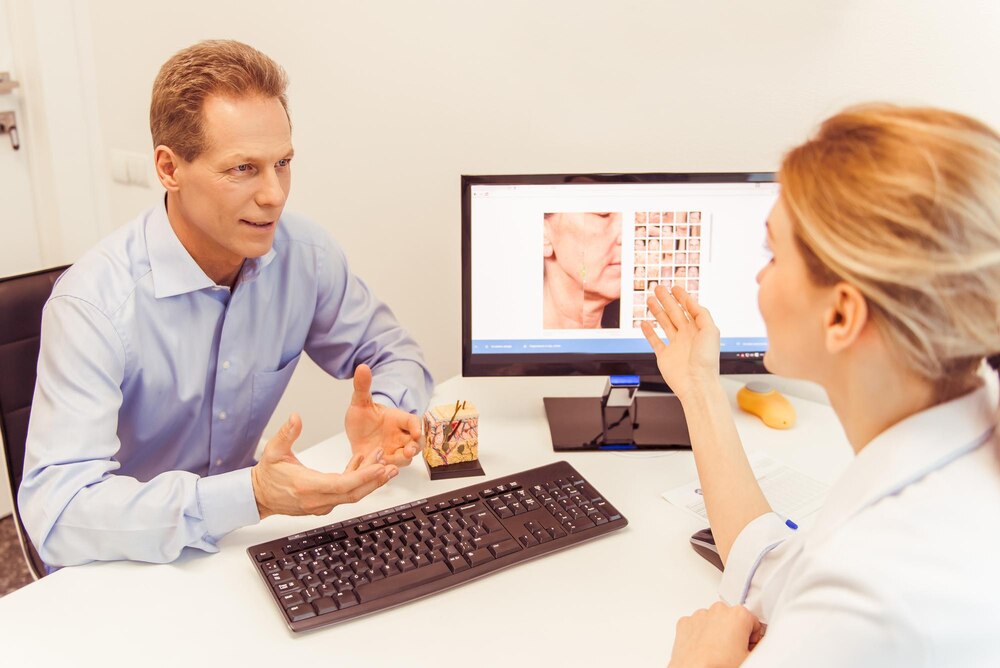
An anatomy-first consultation evaluates every tissue layer of the face. The process typically includes assessment of bone structure and skeletal support, evaluation of fat pad volume and distribution, analysis of skin quality including elasticity and texture, discussion of the patient’s aesthetic goals and timeline, and consideration of how the patient’s face will continue to age over the next 5 to 10 years.
Technology-assisted planning plays an increasingly important role in this process. Modern computer-assisted analysis can help predict outcomes more accurately and reduce recovery times by up to 40% when treatments are properly sequenced. Patients interested in how advanced diagnostic tools shape treatment planning can explore how AI skin analysis for customized facial treatments is being used at La Belle Vie Clinic to refine treatment recommendations.
How Does Bone Structure Influence Which Facial Treatments You Need?
Bone structure is the most overlooked factor in facial aging – and arguably the most important. The peer-reviewed facial bone aging literature review found that facial bone resorption drives 70 to 80 percent of midface and periorbital aging changes. Without addressing bone-level changes, surface treatments such as fillers or skin tightening produce limited or short-lived results.
This explains why some patients feel their filler results “never look right” or fade quickly. If the underlying skeletal framework has receded, adding volume on top of a diminished foundation cannot restore natural proportions. A customized plan identifies whether a patient’s concerns stem from bone loss, soft tissue descent, volume depletion, or skin laxity – and directs treatment accordingly.
What Role Do Regenerative Treatments Play in Customized Facial Plans?
Regenerative treatments – including PRP, PRF, exosomes, skin boosters, and biostimulatory fillers – use the body’s own biology to improve tissue quality from within. These treatments function as customizable additions to a facial treatment plan, enhancing outcomes when matched to individual skin quality and healing capacity rather than applied uniformly to every patient.
The ASPS identified regenerative aesthetics as a major trend for 2026, with board-certified surgeons reporting that these modalities are now standard additions focused on skin quality improvement. Dr. Zoran Potparic, a board-certified plastic surgeon, has observed that “patients seek cosmetic procedures that enhance their beauty without appearing overly done, with emphasis on personalized and preventative treatments via tailored plans.” Regenerative treatments align directly with this demand.
What Are PRP, PRF, and Exosomes and How Are They Used in Facial Rejuvenation?
Understanding these three regenerative modalities helps patients make informed decisions about which options suit their needs.
| Treatment | What It Is | Primary Application |
|---|---|---|
| PRP (Platelet-Rich Plasma) | Concentrated platelets from the patient’s own blood, rich in growth factors | Skin rejuvenation, under-eye improvement, post-procedure healing acceleration |
| PRF (Platelet-Rich Fibrin) | A next-generation blood concentrate with a slower, sustained release of growth factors | Deeper tissue regeneration, longer-lasting skin quality improvement |
| Exosomes | Cell-derived signaling particles that promote cellular communication and repair | Collagen stimulation, fine line reduction, enhanced treatment recovery |
Each modality is selected based on individual tissue quality and specific treatment goals. A patient with thin, sun-damaged skin may benefit most from PRF combined with microneedling, while another patient recovering from surgery might receive PRP to accelerate healing. The selection process is itself part of the customization.
How Do Biostimulatory Fillers Differ From Traditional Dermal Fillers?
Traditional dermal fillers replace lost volume immediately by adding material beneath the skin. Biostimulatory fillers take a different approach – they stimulate the body’s own collagen production over weeks to months, gradually improving skin thickness and quality rather than simply filling space.
The U.S. Food and Drug Administration (FDA) has approved dermal filler products for 10 specific anatomic locations, with different filler materials – hyaluronic acid (HA), calcium hydroxylapatite (CaHA), and poly-L-lactic acid (PLLA) – approved for different anatomic sites. This regulatory framework reinforces that product selection must be anatomically informed. A customized plan determines not just where to treat, but which product type best serves the patient’s tissue and goals.
What Is Prejuvenation and Should You Start Customized Treatments in Your 20s or 30s?
Prejuvenation refers to preventative facial treatments for patients in their 20s and 30s that use low-dose neuromodulators, micro-filler, and light-based devices to preserve youthful facial structure before significant aging occurs. This approach has become routine maintenance in 2026 rather than an exceptional choice, representing a fundamental shift from corrective to preventative aesthetic medicine.
The rationale is straightforward: maintaining existing collagen, preventing expression lines from becoming permanent, and supporting skin quality early requires far less intervention than correcting established changes later. Customized planning is especially important for younger patients because the goal is preservation, not correction – and overtreating a young face carries its own risks.
How Do You Know If You Are a Good Candidate for Preventative Facial Treatments?
Candidacy for prejuvenation depends on several individual factors rather than age alone:
- Family history of aging patterns (early volume loss, deep expression lines, skin laxity)
- Skin quality assessment results (elasticity, sun damage, hydration)
- Lifestyle factors including cumulative sun exposure, smoking history, and stress levels
- Personal aesthetic timeline and goals for the next decade
A customized plan for a 28-year-old looks entirely different from one designed for a 55-year-old. The younger patient might receive targeted neuromodulator placement to prevent specific expression lines and a skin quality protocol, while the older patient might need structural volume restoration and skin tightening. This spectrum is precisely where personalization proves its value.
What Preventative Treatments Deliver the Most Long-Term Value?
Among prejuvenation approaches with the strongest evidence for long-term benefit, consistent skin quality maintenance – including medical-grade retinoids, daily broad-spectrum SPF, and professional-grade treatments – forms the foundation. Neuromodulators applied strategically to high-movement areas prevent expression lines from becoming static wrinkles. Biostimulatory treatments support collagen preservation before significant loss occurs.
No universal prejuvenation protocol exists. The specific combination and dosing depend entirely on individual assessment, which is why a consultation with a qualified provider matters more for younger patients than simply following a social media regimen.
How Are Customized Facial Treatment Plans Different for Men and Women?
Customized facial treatment plans differ significantly between men and women because male and female facial anatomy, skin characteristics, and aesthetic goals are fundamentally different. Male facial skin is approximately 25% thicker, bone structure is more angular, and the aesthetic targets – strong jawline, proportionate brow position, masculine contour – require distinct treatment strategies from those used for female patients.
Research data shows growing male engagement with facial aesthetics. According to ASPS data, male cosmetic surgery searches increased substantially, with face and neck lifts up 14%, brow lifts up 15.5%, eyelid surgery up 15%, and rhinoplasty up 14%. This growth makes gender-specific customization increasingly important for clinics serving a diverse patient population.
What Facial Treatments Are Most Commonly Customized for Male Patients?
Male-specific treatment customization focuses on several critical areas:
| Treatment Area | Male-Specific Consideration | Risk of Generic Approach |
|---|---|---|
| Brow position | Maintain flat or slightly hooded masculine brow | Over-elevation creates a surprised or feminized appearance |
| Jawline | Enhance angular definition rather than soft contour | Volume placement designed for female anatomy rounds the jaw |
| Neuromodulators | Higher doses needed due to stronger muscle mass | Standard dosing may produce inadequate or asymmetric results |
| Skin treatments | Account for thicker dermis and facial hair | Surface treatments calibrated for thinner skin may underperform |
The same procedure performed with the same technique can produce undesirable results when applied without gender-specific adjustments. This is one of the clearest examples of why customization is not optional – it is a clinical necessity.
Which Facial Procedures Can Be Combined in a Customized Treatment Plan?
Multiple facial procedures can be safely combined within a customized treatment plan when properly sequenced and coordinated by a qualified provider. Common combinations include pairing surgical procedures like blepharoplasty with brow lift, layering nonsurgical treatments such as fillers with neuromodulators and skin resurfacing, and creating hybrid plans that combine surgical correction with regenerative maintenance.
Blepharoplasty remained among the top five cosmetic surgical procedures in 2024, with over 120,000 procedures performed in 2023 representing 5% year-over-year growth, according to the ASPS. This procedure frequently serves as a component of a larger customized plan rather than a standalone treatment, particularly when periorbital aging involves both excess skin and surrounding volume loss.
Can You Combine Surgical and Nonsurgical Facial Treatments Safely?
Combining surgical and nonsurgical treatments is both safe and clinically advantageous when properly planned. The key is sequencing – certain treatments enhance surgical outcomes when performed before a procedure, while others are best introduced during the healing phase or as long-term maintenance.
For example, biostimulatory fillers initiated weeks before surgery can improve tissue quality and healing response. Regenerative treatments like PRP applied post-operatively may accelerate recovery. Neuromodulators can be timed to complement surgical results once healing is complete. Technology-assisted planning helps coordinate these timelines to reduce overall recovery by up to 40% compared to uncoordinated treatment scheduling.
How Does Your Treatment Plan Evolve Over Time?
A customized facial treatment plan is not a single event but an evolving strategy. Initial phases may involve more intensive correction – surgical procedures, structural volume restoration, or significant skin quality improvement. Subsequent phases transition to maintenance using regenerative treatments, periodic neuromodulator sessions, and skin quality protocols.
Patients who begin with prejuvenation in their late 20s or 30s may never require intensive surgical correction. Those who begin treatment later benefit from a phased approach that establishes structural improvement first, then maintains results over years. La Belle Vie Clinic positions itself as a long-term partner in this process, adjusting plans as patients’ faces and goals evolve.
Why Do Natural-Looking Results Require a Customized Approach?
Natural-looking results require customization because what appears natural is entirely determined by individual facial proportions, bone structure, skin quality, and ethnic characteristics. A treatment that produces beautifully harmonious results on one patient may look overdone or insufficient on another, making standardized approaches inherently incapable of delivering universally natural outcomes.
Kelly Killeen, MD, a board-certified plastic surgeon and ASPS member, confirmed this principle: “Patients are wanting subtle augmentations… with the ‘keep them guessing attitude.'” Achieving this subtlety demands precise understanding of each patient’s unique anatomy. Minimally invasive procedures have shown a 45% increase in recent years, with over 80% patient satisfaction when treatments are properly customized to individual needs.
What Does “Natural-Looking” Actually Mean in Facial Aesthetics?
In clinical terms, natural-looking results are defined by several measurable characteristics: restored volume proportions that match the patient’s skeletal framework, maintained facial harmony between upper, middle, and lower thirds, preserved individual character rather than homogenized features, and age-appropriate enhancement rather than attempted age reversal.
Natural results also mean avoiding the trend-chasing approach where patients request specific features they have seen on social media that may not harmonize with their own anatomy. A customized plan evaluates what will look natural on the patient’s individual face – which is a clinical judgment that requires anatomical expertise, not a catalog selection.
Why Should You Choose a Board-Certified Specialist for Customized Facial Treatments?
Board-certified plastic surgeons and trained aesthetic providers possess the anatomical knowledge across all five facial tissue layers, surgical and nonsurgical proficiency, and developed aesthetic judgment required to create truly customized treatment plans. Providers without this comprehensive training may default to limited treatment menus that cannot address the full complexity of facial aging.
The consequences of trend-chasing without expert guidance are measurable. Noninvasive fat reduction experienced a dramatic 40% decline in procedure volume in 2024 according to ASPS data, illustrating how patients who followed trends without individualized planning often invested in procedures that failed to deliver lasting satisfaction. Board certification ensures the provider has completed rigorous training in facial anatomy, surgical technique, and aesthetic assessment methodology.
What Questions Should You Ask During a Facial Treatment Consultation?
Patients should arrive at any facial treatment consultation prepared with questions that reveal whether the provider truly customizes treatment:
- How do you assess my facial anatomy before recommending specific treatments?
- Which facial layers are contributing to my concerns – bone, fat, muscle, or skin?
- Why are you recommending these specific products and techniques for my anatomy?
- How will my treatment plan be sequenced and what is the timeline?
- What results can I realistically expect based on my individual facial structure?
- How will my plan evolve over the next several years?
A provider who answers these questions with specificity – referencing your anatomy rather than general protocols – demonstrates the expertise needed for true customization.
Frequently Asked Questions About Customized Facial Treatments
How Much Do Customized Facial Treatments Cost Compared to Standard Procedures?
Customized treatment plans may involve different cost structures than a la carte pricing. However, they often deliver better long-term value by optimizing outcomes from the start and reducing the need for corrective revisions. A comprehensive consultation is the starting point for understanding the investment required for your specific goals and anatomy. Many patients find that a coordinated plan costs less over time than a series of disconnected treatments that fail to address root causes.
How Long Does It Take to See Results From a Customized Facial Treatment Plan?
Results timelines depend on the treatments included in a customized plan. The following general framework applies:
| Treatment Type | Initial Results | Final Results |
|---|---|---|
| Neuromodulators (Botox) | 3 to 5 days | 2 weeks |
| Dermal fillers | Immediate | 2 to 4 weeks (after swelling resolves) |
| Biostimulatory fillers | 4 to 6 weeks | 3 to 6 months |
| Regenerative treatments (PRP/PRF) | 2 to 4 weeks | 3 to 6 months |
| Surgical procedures | 2 to 4 weeks (initial healing) | 6 to 12 months |
Staged plans produce progressive improvement, with each phase building on the last. Customized timelines are themselves part of the personalization process.
Are Customized Facial Treatments Suitable for All Skin Types and Ethnicities?
Customized facial treatments are not only suitable for all skin types and ethnicities – they are essential. Generic protocols fail most significantly when applied across diverse populations because treatment parameters must account for melanin content, healing characteristics, keloid risk, and structural differences in facial bone and soft tissue. A truly individualized approach evaluates these factors as fundamental variables, not afterthoughts.
What Is the Difference Between a Med Spa Facial and a Customized Facial Treatment Plan?
A standard med spa facial focuses on skin-level improvement through cleansing, exfoliation, and hydration. A customized facial treatment plan is a medically directed strategy that addresses aging across all five tissue layers – from bone to skin surface – using surgical, injectable, regenerative, and skin-quality treatments coordinated into a unified plan. La Belle Vie Clinic integrates med spa services with surgical expertise, providing comprehensive customization that standalone med spas without surgical oversight cannot offer.
Can Customized Facial Treatments Replace the Need for a Facelift?
For some patients, strategically customized nonsurgical treatments can delay surgery or reduce its scope significantly. For others, surgery provides the most effective structural foundation that nonsurgical treatments alone cannot replicate – particularly when significant skin laxity or deep tissue descent is present. The honest answer depends entirely on individual anatomy and goals, which is precisely the article’s central argument: the right plan for your face can only be determined through personalized assessment.
How Can You Get Started With a Customized Facial Treatment Plan This Summer?
Summer is one of the most popular consultation seasons, as patients plan facial treatments around vacation schedules and social events. Scheduling a comprehensive facial assessment now allows time to develop a customized plan, with certain treatments ideally implemented during fall and winter when sun exposure is reduced and recovery schedules are more flexible.
For Seattle-area patients interested in exploring what a truly customized facial treatment plan looks like, La Belle Vie Cosmetic Surgery Clinic offers anatomy-first consultations led by Dr. Tony Mangubat. Whether you are considering prejuvenation in your 20s or comprehensive rejuvenation later in life, the process begins with understanding your unique facial anatomy and designing a plan built specifically for you. Reach out to the La Belle Vie team to schedule your consultation and discover what personalized facial treatment planning can achieve for your individual goals.
Frequently Asked Questions
What are customized facial treatments and how are they different from standard procedures?
Customized facial treatments are procedures, products, and techniques selected based on a patient’s unique facial anatomy, skin type, aging pattern, and aesthetic goals rather than a one-size-fits-all protocol. The face contains multiple independent anatomical compartments that age at different rates, so uniform treatment approaches often produce incomplete or unnatural results. Personalized planning addresses all five facial tissue layers – bone, ligaments, muscles, fat pads, and skin – for comprehensive outcomes.
How long does it take to see results from a customized facial treatment plan?
Results timelines vary by treatment type within a customized plan. Neuromodulators like Botox show initial results in 3 to 5 days with final results at 2 weeks. Dermal fillers produce immediate volume with final results visible after 2 to 4 weeks. Biostimulatory fillers and regenerative treatments like PRP take 3 to 6 months for full results. Surgical procedures require 6 to 12 months for final outcomes. Staged plans produce progressive improvement with each phase building on the last.
Why do generic facial procedures often produce unnatural or overdone results?
Generic procedures often look unnatural because they ignore individual bone structure, fat compartment volume loss, and skin quality. Research shows that comprehensive skeletal-inclusive facial rejuvenation improved aesthetic outcomes by 34% compared to soft-tissue-only treatment, with 94% patient satisfaction. When the underlying skeletal framework has receded due to bone resorption – which drives 70 to 80 percent of midface aging – adding volume on top of a diminished foundation cannot restore natural proportions.
Can customized facial treatments replace the need for a facelift?
For some patients, strategically customized nonsurgical treatments can significantly delay surgery or reduce its scope. However, when significant skin laxity or deep tissue descent is present, surgery provides the most effective structural foundation that nonsurgical treatments alone cannot replicate. The answer depends entirely on individual facial anatomy and goals, which is why a personalized assessment with a board-certified specialist is essential before determining the right approach.
Are customized facial treatments suitable for all skin types and ethnicities?
Customized facial treatments are not only suitable for all skin types and ethnicities – they are essential. Generic protocols fail most significantly across diverse populations because treatment parameters must account for melanin content, healing characteristics, keloid risk, and structural differences in facial bone and soft tissue. A truly individualized approach evaluates these factors as fundamental variables rather than afterthoughts, ensuring safer and more effective outcomes for every patient.
What is prejuvenation and when should you start preventative facial treatments?
Prejuvenation refers to preventative facial treatments for patients in their 20s and 30s that use low-dose neuromodulators, micro-filler, and light-based devices to preserve youthful facial structure before significant aging occurs. Candidacy depends on family history of aging patterns, skin quality, lifestyle factors like sun exposure, and personal aesthetic goals – not age alone. Starting early requires far less intervention than correcting established changes later.
How are customized facial treatment plans different for men and women?
Male and female facial treatment plans differ significantly because anatomy, skin characteristics, and aesthetic goals are fundamentally different between genders. Male skin is approximately 25% thicker, bone structure is more angular, and aesthetic targets focus on jawline definition and masculine brow position. Using female-calibrated techniques on male patients risks feminizing the brow, rounding the jawline, or producing inadequate results from standard neuromodulator dosing designed for thinner muscle mass.
