
Last updated: November 20, 2026
To reduce male chest enlargement, your options may include waiting for puberty-related tissue to settle, treating an underlying cause, losing excess chest fat, or surgery to remove persistent glandular tissue. The right approach depends on whether the fullness comes from gland, fat, or both. At La Belle Vie Cosmetics, our gynecomastia and male breast reduction service begins with an assessment of the tissue and your goals.
How do you get rid of gynecomastia?
Gynecomastia treatment starts by identifying what is enlarging the chest. Puberty-related glandular growth may settle without treatment, and weight loss can reduce excess chest fat. When glandular tissue persists, male breast reduction can remove tissue that exercise does not reliably eliminate.
How can you tell gynecomastia from chest fat?
Glandular enlargement may feel like a distinct area beneath the nipple, sometimes with tenderness. Fat-only enlargement, called pseudogynecomastia, tends to feel more diffuse; fat and glandular tissue can also occur together. Cleveland Clinic’s guidance on gynecomastia explains that weight loss may decrease fat-related enlargement. Appearance and touch alone cannot establish the cause, particularly when a change is new or affects only one side.
What does stage 1 gyno look like?
There is no universal “stage 1” diagnosis, but surgeons do grade gynecomastia by the amount of enlargement and loose skin. In the Simon classification, the mildest grade, grade I, means a small enlargement without excess skin. It may look like a puffy or slightly cone-shaped nipple, with a small, firm, sometimes tender disc of tissue beneath it.
What are the causes of gynecomastia in men?
Puberty-related hormone changes, certain medicines such as anti-androgens and opioids, anabolic steroids, and medical conditions that affect hormones can cause glandular breast tissue in males to enlarge. An article on the American Society of Plastic Surgeons website discusses these contributors. Age-related hormone changes, liver or kidney disease, and, less commonly, a testicular tumor are other possible causes; sometimes no cause is found.
Does gyno mean high testosterone?
No. The Endocrine Society explains that gynecomastia results from an imbalance between estrogen and testosterone. It can develop when testosterone is low relative to estrogen; chest appearance alone cannot tell you what your hormone levels are.
Can gynecomastia resolve itself or go away without surgery?
Yes. Puberty-related enlargement may shrink on its own, and recently developed enlargement may improve when its cause is addressed. MedlinePlus notes that gynecomastia present for a long time is less likely to resolve, even with treatment. A clinician can evaluate a medical cause such as low testosterone, review a medicine that may be contributing, or discuss stopping anabolic steroids, marijuana, or alcohol. Change a prescription only with its prescriber’s guidance.
For selected patients with recent, troublesome gynecomastia, Mayo Clinic’s diagnosis and treatment guidance discusses tamoxifen, while a clinical review of gynecomastia discusses tamoxifen and raloxifene. Evidence for their use in gynecomastia is limited. Although Mayo Clinic also mentions anastrozole, the clinical review reports that it was not significantly better than placebo in a study of pubertal gynecomastia and does not recommend aromatase inhibitors for routine treatment. These drugs are FDA-approved for other conditions, not specifically for gynecomastia, so their use for gynecomastia is off-label. Tamoxifen and raloxifene carry serious warnings about blood clots and stroke; anastrozole can reduce bone density.
Will gynecomastia in late adolescence go away?
Often, yes. Mayo Clinic says teen gynecomastia often goes away without treatment in less than two years, and a teen’s health care team may recommend checkups every 3 to 6 months. A teenager with breast enlargement should see a pediatrician or primary care doctor, who can check for causes such as medicines, marijuana, or anabolic steroids and follow how the enlargement changes.
How can I reduce my gynecomastia naturally?
Weight management and exercise can reduce chest fat, but chest exercises cannot specifically remove breast gland. For related information, see our guide to medications that may contribute to gynecomastia.
Can I remove gynecomastia myself?
No. Cutting, squeezing, or trying to drain chest tissue at home can cause injury and will not safely treat glandular enlargement.
What happens if gynecomastia is left untreated?
Gynecomastia itself is benign, but enlarged tissue may remain tender or continue to cause distress. Long-standing glandular tissue is less likely to shrink, and an underlying medical condition or contributing medicine may continue to cause enlargement if the cause is not addressed.
Who is a candidate for male breast reduction surgery?
Male breast reduction may suit an adult with persistent chest enlargement who wants a flatter contour after possible medical causes have been evaluated. Candidacy depends on the amount of fat and gland, skin laxity, general health, and realistic goals. At La Belle Vie Cosmetics, we also recommend reaching a stable weight before surgery to help maintain the result.
When should you consider surgery instead of waiting?
For an adult, surgery may be worth considering when enlargement remains after waiting for it to resolve or treating an underlying cause, and its appearance or other symptoms still bother you. An article on the American Society of Plastic Surgeons website notes that, once puberty is complete, glandular enlargement that has persisted for more than a year is unlikely to reverse fully with medical treatment alone because the tissue becomes fibrotic.
How does a consultation determine the right approach?
During a consultation, Dr. Tony Mangubat reviews health history and lifestyle, examines tissue thickness, skin laxity, and symmetry, and takes measurements and photographs. We then discuss goals, realistic outcomes, and whether liposuction, direct tissue excision, or a combination best fits the anatomy.
How does gynecomastia surgery remove glandular tissue and fat?
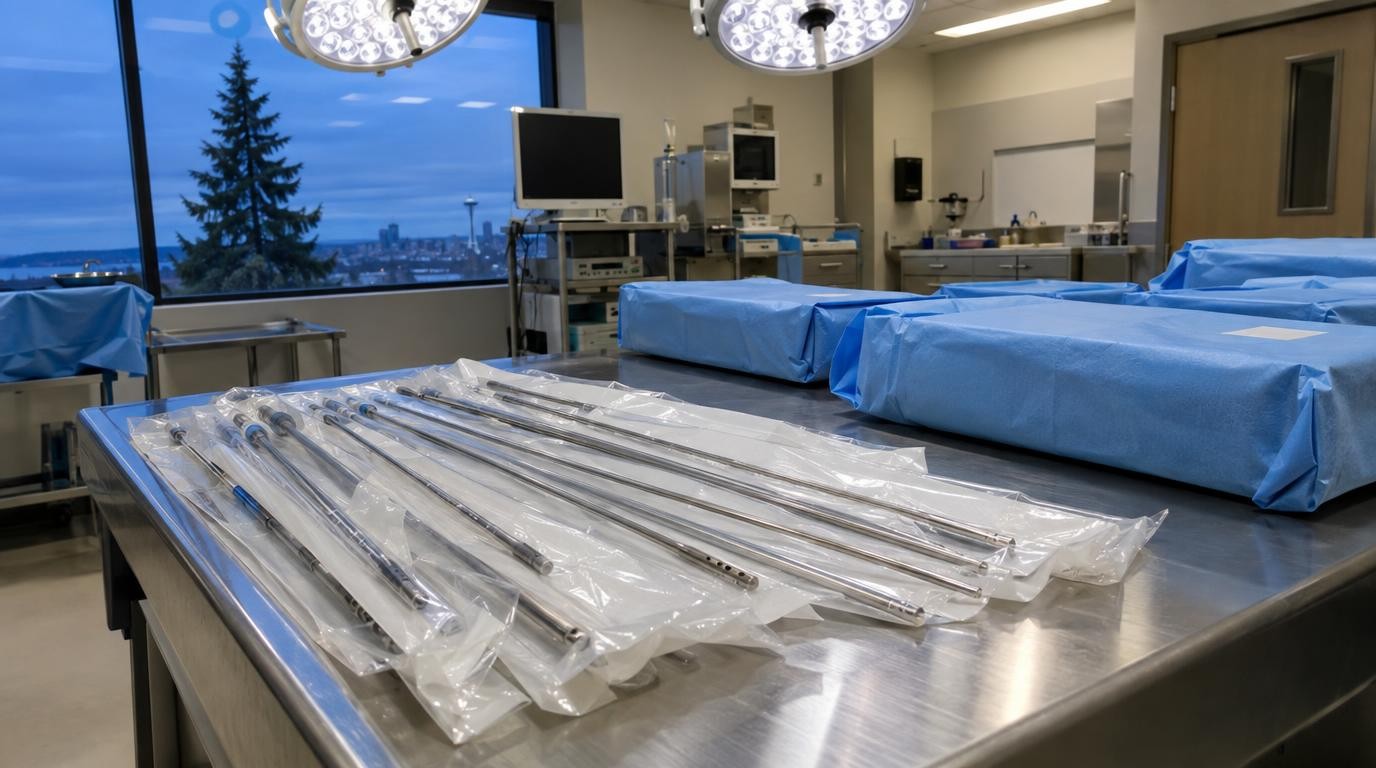
Gynecomastia surgery uses liposuction to remove excess fat and direct excision when denser glandular tissue must be removed. Some patients need both techniques, and loose skin may require skin excision. At La Belle Vie Cosmetics, surgery takes place under general anesthesia in our accredited surgical suite; incision placement and the resulting scars depend on the tissue being treated.
When is liposuction enough, and when is excision needed?
Liposuction alone may be enough when fullness is mostly fat; dense glandular tissue or excess skin calls for excision, and a combination may be needed when both fat and gland contribute. The American Society of Plastic Surgeons’ gynecomastia procedure steps explain how the techniques work:
| Approach | How it works | What to consider |
|---|---|---|
| Liposuction | A thin tube removes fat through small incisions. | It does not reliably remove dense glandular tissue or substantial loose skin. |
| Excision | The surgeon removes glandular tissue and, when needed, excess skin through an incision. | Incision length and scarring depend on how much tissue or skin must be removed. |
| Liposuction and excision | Fat removal is combined with direct removal of firmer tissue. | Additional skin removal may be needed if the chest skin will not contract enough. |
At La Belle Vie Cosmetics, a typical procedure takes 1 to 2 hours, depending on the extent of treatment. When excision is needed, an incision may follow the lower border of the areola; we generally use fine, dissolvable sutures for closure. A different incision may be needed if the tissue or skin requires a different approach.
Can surgery address puffy nipples or loose chest skin?
Yes, but the right technique depends on the cause. Gland beneath the areola may contribute to puffy nipples, while stretched skin may not contract enough after fat and gland removal alone. Excision can address tissue or skin that liposuction cannot, though greater skin removal can mean more visible scars. Reducing the areola or repositioning the nipple also requires excision rather than liposuction alone. The examination helps set a realistic expectation for nipple shape, symmetry, and scarring.
What are the risks of gynecomastia surgery, and who should wait?
Temporary swelling, bruising, and mild discomfort are common during recovery. An article on the American Society of Plastic Surgeons website notes that most patients recover smoothly, although complications can occur and may affect healing or the final contour.
What side effects and complications should patients discuss?
A satisfactory contour cannot be guaranteed. Possible complications include bleeding, infection, fluid buildup, anesthesia-related problems, changes in nipple sensation, nipple skin loss, and contour irregularity or asymmetry. Cleveland Clinic’s gynecomastia surgery guidance also lists pain that does not go away. The American Society of Plastic Surgeons’ gynecomastia results page notes that a second operation is sometimes needed to improve the result or address a complication. Discuss these risks and your personal health factors with your clinician before deciding on surgery.
After surgery, call our team promptly for rapidly increasing chest swelling, ongoing bleeding, fever, or redness spreading from an incision. Seek emergency care for chest pain or difficulty breathing.
When should surgery be postponed for medical evaluation?
If you notice a new or hard breast lump, rapid or one-sided enlargement, nipple discharge, or chest skin changes, seek prompt medical assessment before planning elective contouring. Defer elective surgery if a medical condition makes surgery or anesthesia unsafe. Ongoing hormonal or medication-related causes should be evaluated and addressed where possible; if a contributing agent cannot be changed, discuss with your treating clinician and our team whether surgery should wait. Dr. Tony Mangubat assesses readiness, including a stable weight and our requirement to avoid smoking, vaping, and other nicotine use for at least 4 to 6 weeks before surgery. Review medications and supplements with our surgical team, and follow its individualized directions for fasting, medications, and hygiene before general anesthesia.
What is recovery like after male breast reduction?
Recovery after male breast reduction involves early swelling and bruising, prescribed compression, incision care, and a gradual return to activity. We provide individualized instructions because healing and job demands differ. Early in recovery, avoid raising your arms above chest level, and sleep slightly elevated without putting pressure on your chest, as we direct.

When can you return to work and exercise?
At La Belle Vie Cosmetics, many patients return to work in 5–10 days, may start light cardio at 2–3 weeks, and wait 6–8 weeks or until Dr. Tony Mangubat clears them before chest or heavy upper-body training. These are planning estimates, not guaranteed deadlines; job demands, comfort, and healing can change your schedule.
| Planning consideration | What to do |
|---|---|
| Ride home and assistance | La Belle Vie Cosmetics asks you to arrange a ride home and help for the first 1–2 days. |
| Work duties | Discuss physically demanding work with our team; your return may differ from that of someone with a desk job. |
| Exercise progression | Resume activity gradually, avoid early chest straining, and follow Dr. Tony Mangubat’s clearance for heavier training. |
How should you use the compression garment and care for incisions?
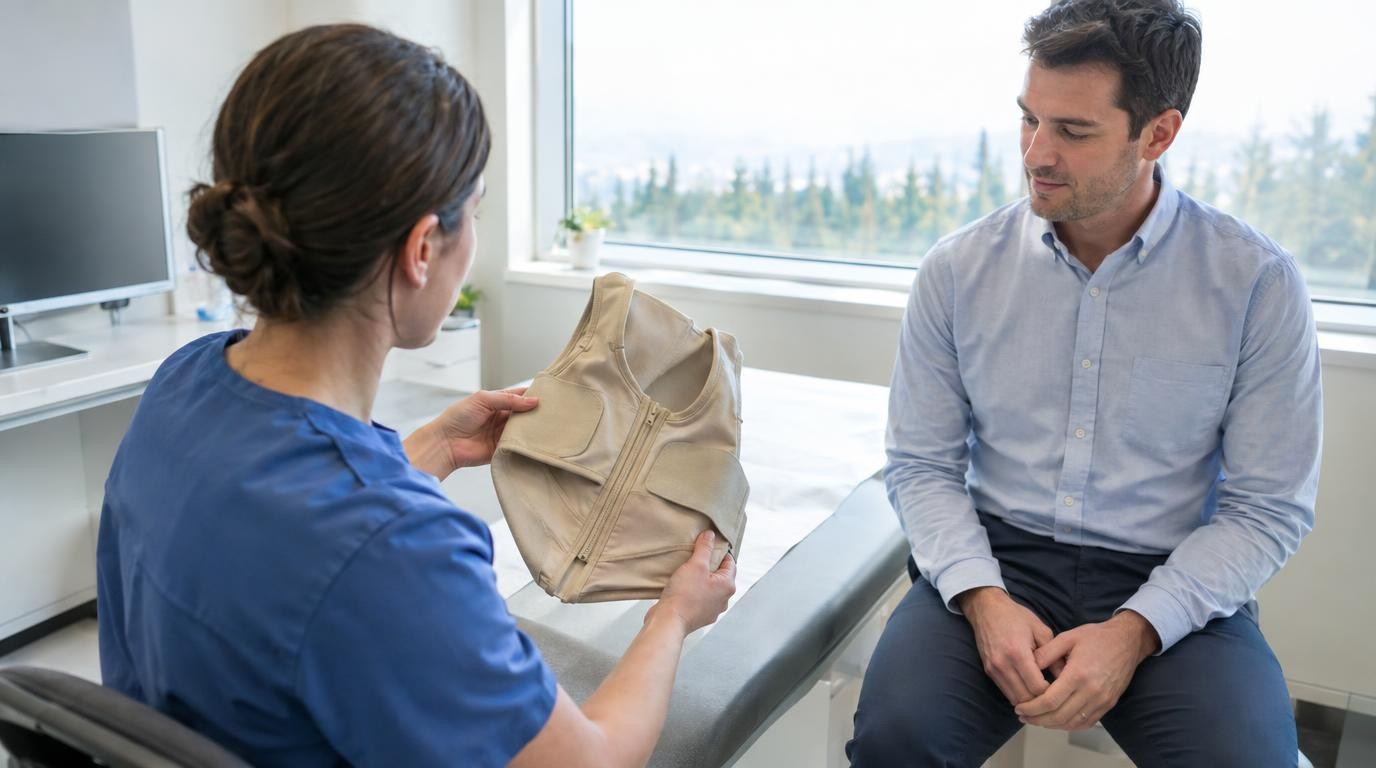
Wear the compression garment as prescribed; our instructions often call for continuous wear during the early weeks. Follow the wound-care directions provided for your incisions, keep follow-up appointments, and expect some swelling even after you feel ready for ordinary activities. Begin scar massage or use silicone scar products only after clearance, when the incisions have healed sufficiently.
How long do gynecomastia surgery results last?
Removal of excess gland and fat can produce a long-lasting improvement in chest contour, especially when weight remains stable and no active cause of enlargement continues. The contour becomes clearer as swelling subsides, while scars and subtle tissue changes continue to mature afterward.
Can gynecomastia return after surgery?
When hormonal balance is stable and weight remains steady, recurrence after surgery is rare. The American Board of Cosmetic Surgery’s male breast reduction guidance describes surgery as a consistently effective option with long-lasting results, while noting that weight loss alone may leave glandular tissue behind. Surgery does not remove every trace of breast tissue, so a continuing cause can lead to renewed enlargement.
When will you see the final chest contour?
At La Belle Vie Cosmetics, much of the new contour is typically visible by 6 to 8 weeks. Residual swelling can take up to about 6 months to settle, and scars can continue to fade afterward. An early uneven or swollen appearance is not necessarily the final shape.
Frequently Asked Questions
What tests do doctors use to diagnose gynecomastia?
Depending on the findings, tests may include hormone blood tests, liver or kidney function studies, and breast ultrasound or mammography; a suspicious lump may need further evaluation, including a biopsy. A doctor uses your symptoms, medication history, and an examination of the chest, abdomen, and genitals to decide whether any tests are needed. Clearly fat-only enlargement, or pseudogynecomastia, may not need further testing after evaluation.
Is gynecomastia common?
Yes. Cleveland Clinic reports that gynecomastia affects more than 50% of males at some point in their lives. It occurs most often in newborns, during puberty, and in older adulthood.
Can gynecomastia affect just one side of the chest?
Yes. The American Society of Plastic Surgeons’ gynecomastia overview notes that enlargement can affect one breast or both.
Will I need drains after gynecomastia surgery?
Not always. At La Belle Vie Cosmetics, we use drains only in some cases; when used, they are often removed early in recovery. Dr. Ramon Garza III, writing on the American Society of Plastic Surgeons blog, describes drains as sometimes necessary to help prevent fluid buildup.
Are gynecomastia surgery scars permanent?
Yes. Gynecomastia surgery scars are permanent, although they generally fade and may be concealed along natural chest contours. At La Belle Vie Cosmetics, we plan incision placement around your anatomy and treatment needs; no technique can promise a scar-free result.
Does male breast reduction change the underlying chest muscles?
No. Male breast reduction addresses fat, glandular tissue, or skin over the chest muscles; it does not reshape the underlying pectoral muscles.
Do you go home the same day after gynecomastia surgery?
Usually, yes. Gynecomastia surgery is typically outpatient, meaning patients go home the same day and need someone to drive them.
Can male breast reduction improve uneven chest fullness?
Yes. Dr. Tony Mangubat assesses each side and can tailor fat or gland removal to improve balance. Some natural asymmetry may remain, and surgery cannot guarantee perfect symmetry.
How can you plan gynecomastia treatment in Seattle?
Start with a medical assessment if your chest enlargement is new, unexplained, or may have an underlying cause. If it persists or bothers you, arrange a surgical consultation to discuss your options. We serve Seattle-area patients from our office at 16400 Southcenter Pkwy, Suite 101, Tukwila, WA 98188; you can call us or use our Request a Consultation form to arrange a visit.
What should you bring to a gynecomastia consultation?
Bring a list of medications and supplements, relevant health history, your goals, and questions about risks and recovery. Clothing you hope to feel more comfortable wearing or reference images are optional ways to communicate the contour you have in mind. You can reach us at 206-575-0300. If you would like to explore your options, contact La Belle Vie Cosmetics to request a consultation at our Seattle-area office in Tukwila, Washington.
This information is general and is not medical advice. Talk to a licensed clinician about your own situation before making a treatment decision.
About the doctors at La Belle Vie Cosmetics
Dr. Tony Mangubat, MD – Board-certified cosmetic surgeon, chief surgeon and medical director since 1987.
Dr. Lena Weinman – Cosmetic surgeon (cosmetic surgery fellowship with Dr. Mangubat, 2024); board-certified by the American Osteopathic Board of Obstetrics and Gynecology.
