
Last updated: October 31, 2026
Fat transfer under eyes uses your own harvested and purified fat to add volume beneath the lower eyelids. It may soften under-eye hollows and the transition into the cheeks, but the result depends on what is causing the shadow or tired appearance in the first place.
What is fat transfer under the eyes, and what does it treat?
At La Belle Vie Cosmetics, we take fat from another part of your body, purify it, and place it beneath your eyes to add volume to hollows as part of our fat transfer for the face and body service. Volume loss can create a shadow that resembles a dark circle, so identifying the cause matters more than the appearance of the shadow alone. Our guide to why eyes can look tired explains other concerns that may need a different approach.
Can fat transfer improve every type of dark circle or under-eye bag?
No. Added volume may reduce a shadow caused by hollowing, but it does not remove skin pigment or tighten loose lower-eyelid skin. A prominent bag may also remain visible after a hollow is filled. These concerns can occur together, which is why an examination is more useful than choosing a procedure based on a photograph alone.
How is under-eye fat transfer performed?
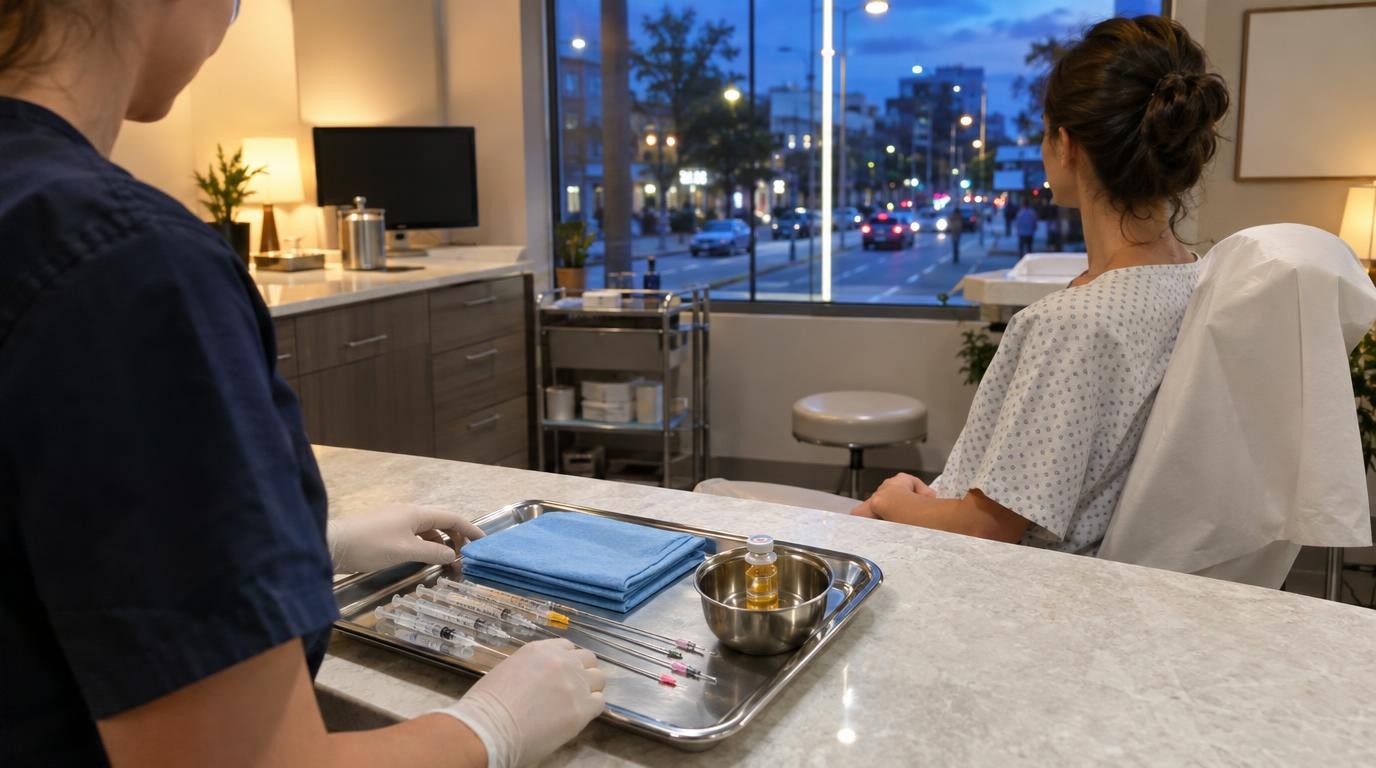
We restore under-eye volume by harvesting fat from a donor area, processing it, and placing it beneath the lower eyelids:
- Harvesting: Fat is gently removed from a suitable donor area by liposuction.
- Purification: The harvested material is processed to isolate fat for transfer.
- Placement: Purified fat is placed with fine cannulas to build an even contour.
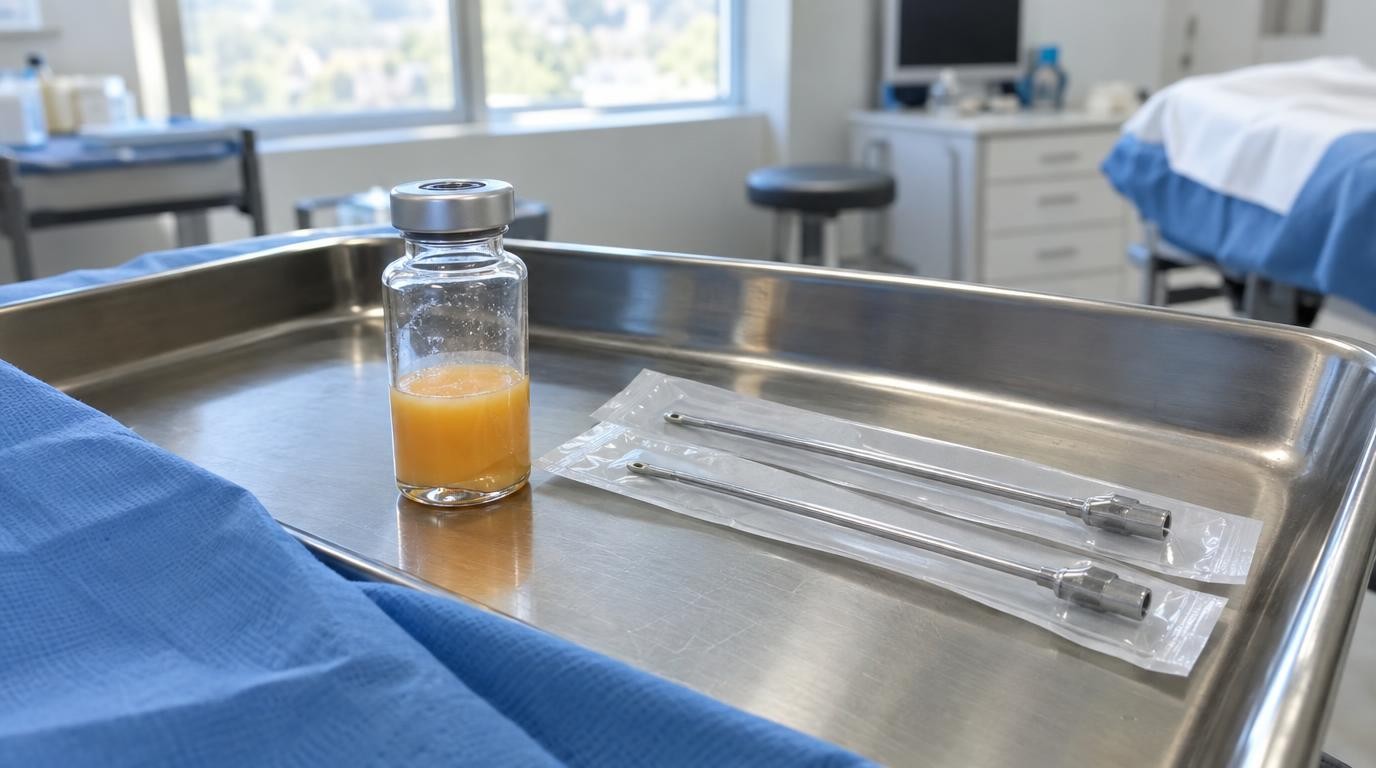
At La Belle Vie Cosmetics, anesthesia may be local with sedation or general, depending on the areas treated. Cleveland Clinic’s under-eye fat-transfer guidance estimates that an under-eye procedure takes approximately 30 to 60 minutes; our fat-transfer procedures at La Belle Vie Cosmetics typically take one to three hours, depending on the areas treated. Neither estimate guarantees how long your appointment will take.
Under-eye fat transfer is generally an outpatient procedure. Plan to go home the same day with someone else driving you, and follow our team’s instructions for your procedure.
Where does the fat come from?
Our common donor areas include the abdomen, flanks, and thighs. The choice depends on whether a patient has suitable fat available and how the donor area fits the overall treatment plan.
What happens to the fat before it is placed under the eyes?
After harvesting, we separate the fat from other fluids and impurities, then purify it to prepare fat cells for placement beneath the eyes. A 2022 review in Plastic and Reconstructive Surgery Global Open discusses processing and preparation of the receiving site as factors in graft retention. Purification cannot guarantee that every transferred cell will survive.
Who is a good candidate for under-eye fat grafting?
A good candidate for under-eye fat grafting is generally in good overall health, has suitable donor fat, and wants to address under-eye volume loss with realistic expectations. Suitability depends on the lower-eyelid contour and the cause of the concern. The American Board of Cosmetic Surgery’s facial fat-grafting guidance recommends discussing a stable weight before treatment: surviving fat can gain or lose volume with weight changes. A weight change does not automatically rule out treatment, but tell your clinician if your weight is changing.
How do you know whether hollows are caused by volume loss?
A clinician examines the contour beneath the lower eyelid and its transition into the cheek. A recessed area can cast a shadow even when the skin itself is not darker. If discoloration remains apparent independent of the contour, or a projecting bag is the dominant feature, adding volume alone may not address the main concern.
What is the success rate of fat transfer under the eyes?
There is no single success rate that predicts an individual under-eye result. Patient satisfaction, complications, and the amount of fat that survives are different measures.
The 2021 PLOS ONE systematic review and meta-analysis of eyelid and periorbital fat grafting reported the following pooled findings:
| Measure | Finding | What it means |
|---|---|---|
| Evidence reviewed | 39 studies and 4,046 cases | Cases covered eyelid and periorbital procedures, not only under-eye hollows. |
| Patient satisfaction | 90.9% (95% CI, 86.4%-94.0%) | A pooled report of satisfaction, not a personal probability of success. |
| Overall complications | 7.9% (95% CI, 4.8%-12.8%) | A pooled rate for the reviewed population, not an under-eye-only risk estimate. |
What did the 39-study review actually measure?
The 2021 PLOS ONE review included 3 cohorts and 36 case series of fat grafting around the eyelids and surrounding eye area, with reports of satisfaction and complications. It did not establish how much fat will survive beneath a particular patient’s eyes or guarantee a lasting cosmetic result. Differences in patients, treatment goals, and techniques also limit how directly a pooled figure applies to one consultation.
What are the risks of under-eye fat transfer, and who should avoid it?
Under-eye fat transfer can cause swelling or an uneven contour, and people in poor overall health or without suitable donor fat may not be candidates. Disclose active skin disease and nicotine use before surgery; nicotine can slow healing.
Which side effects did the research report most often?
The PLOS ONE review also frequently reported chemosis, or swelling of the membrane covering the white of the eye. Bruising can occur at the donor and treatment sites; other possible complications include infection, lumps or cysts, and skin damage or scarring. If too little fat survives, the result may be less full than hoped for. The review’s pooled complication rate does not give an individual rate for each of these risks.
Why does the under-eye area require careful evaluation?
The lower eyelid has delicate tissues, and small contour differences can be noticeable. In very rare instances, transferred fat entering a blood vessel can block blood flow and irreversibly damage vision. Seek urgent medical care for a new vision change after treatment. Cleveland Clinic’s general fat-transfer guidance advises contacting the treating surgeon immediately for excessive bleeding, a high fever, sudden or persistent sharp pain, redness and heat at an incision, fluid leaking from an incision, persistent dizziness, or severe nausea or vomiting. Discuss your health history, medications, suitability, and individual risks with your clinician before surgery.
How long does recovery take after under-eye fat transfer?
At La Belle Vie Cosmetics, mild swelling or bruising at both the under-eye treatment area and the fat-harvesting site typically subsides within one to two weeks, although individual recovery varies.

Early fullness beneath the eyes may reflect swelling as well as transferred fat. Donor-site bruising or soreness may affect comfort even when the under-eye area feels manageable. Follow the instructions given for both areas rather than using the appearance of the eyes alone to judge recovery.
When can you return to light activities and exercise?
Most patients can return to light activities within a few days and resume normal exercise after two to three weeks following fat transfer. Those are general expectations, not clearance for every under-eye procedure or donor site.
How long does facial fat transfer last?
Surviving facial fat transfer may provide volume for years and potentially for life, but some transferred fat is absorbed and your appearance can change over time. Early swelling makes the immediate result an unreliable guide to lasting fullness.
Our guide to facial fat transfer results explores what lasting volume can mean across facial treatment areas. Longevity is separate from patient satisfaction: the satisfaction finding in the linked review does not tell a patient how much under-eye fat will remain.
What happens to facial fat transfer after 5 years?
Fat that survives the initial healing period may still add volume after five years, but the face continues to age and under-eye contours can change. Neither unchanged volume nor a specific under-eye retention percentage at five years can be promised.
When can you judge the lasting volume?
Cleveland Clinic says complete under-eye results can take up to four months as swelling settles and the graft establishes a blood supply. That is a general estimate, not a deadline for every patient.
How does under-eye fat transfer compare with fillers or eyelid surgery?
Fat transfer and dermal fillers add volume to under-eye hollows, whereas eyelid surgery can address appropriate bags or excess skin by removing or repositioning tissue.
Here is how the options differ:
| Option | What it can address | Procedure and durability |
|---|---|---|
| Under-eye fat transfer | Hollowing caused by volume loss, but not skin pigment or excess skin. | Requires fat harvesting by liposuction; surviving fat may provide long-lasting volume, although some is absorbed. |
| Dermal filler | Hollowing caused by volume loss, but not skin pigment or excess skin. | Adds volume without harvesting fat; results often require repeat maintenance. American Academy of Ophthalmology guidance notes that hyaluronic acid filler can be dissolved with hyaluronidase; grafted fat cannot be reversed this way, and not all fillers are dissolvable. |
| Eyelid surgery | Prominent bags or excess skin, depending on the approach. | Removes or repositions eyelid tissue rather than treating skin pigment. |
When might another approach better address under-eye concerns?
Skin resurfacing may help with pigment or texture concerns, but it does not replace lost under-eye volume. When concerns overlap, more than one approach may be relevant; our comparison of eyelid surgery and nonsurgical eye treatments provides context.
Frequently Asked Questions
What percentage of transferred fat stays under the eyes?
There is no reliable under-eye-specific retention percentage. The American Board of Cosmetic Surgery suggests expecting 40-70% of grafted fat to remain after 12 months for facial fat grafting generally; individual under-eye retention can differ.
Will I need a second under-eye fat transfer?
A second procedure is possible, but not everyone needs one. Some transferred fat is absorbed, so the final fullness may differ from what you see immediately after treatment. Cleveland Clinic notes that another transfer may be recommended if the result is unsatisfactory after healing.
Can the cheeks be treated at the same time as the under-eye area?
Potentially. Our facial fat-transfer service also treats the cheeks, so treating both areas may be an option if the transition between them contributes to your concern. Your clinician can assess whether both areas need volume and whether treating them together fits your plan.
Can under-eye fat transfer be combined with eyelid surgery?
Yes. Under-eye fat transfer can be combined with eyelid surgery when both volume loss and eyelid concerns need attention. Some procedures can be performed in one surgery, while others need to be spaced apart.
What should I tell my surgeon before under-eye fat transfer?
Tell your surgeon about your medications, supplements, nicotine use, skin conditions and treatments, and whether you are pregnant or breastfeeding. Cleveland Clinic specifically flags blood thinners, NSAIDs and supplements that may increase bleeding or bruising.
When can I go back to work after under-eye fat transfer?
Your return to work depends on your healing, job duties and the donor site as well as the under-eye area. Cleveland Clinic’s general fat-transfer guidance says some people resume work after a week, while others need two weeks or more.
Should I avoid pressing on the under-eye area after fat transfer?
Yes. Avoid firm pressure on the treated area unless your surgeon gives you different instructions. The American Society for Dermatologic Surgery recommends this precaution after fat transfer and notes that the area may initially look overfilled. Follow your own aftercare plan for both the under-eye area and the fat-harvesting site.
Where can Kenmore patients discuss under-eye fat transfer?
Patients traveling from Kenmore can visit La Belle Vie Cosmetics at our Seattle-area office, 16400 Southcenter Pkwy, Suite 101, Tukwila, WA 98188, to discuss facial fat transfer.
Dr. Tony Mangubat is a board-certified cosmetic surgeon who offers personalized recommendations during consultations. An evaluation for under-eye treatment should consider whether hollows coexist with bags or excess skin, since those concerns may call for different approaches.
If you are considering fat transfer under eyes, contact La Belle Vie Cosmetics for a consultation with Dr. Tony Mangubat. Our Seattle team welcomes patients from Kenmore and can be reached at 206-575-0300.
This information is general and is not medical advice. Talk to a licensed clinician about your own situation before making a treatment decision.
