
Last updated: November 5, 2026
An endoscopic brow lift raises the brow and forehead through small incisions behind the hairline while a camera helps the surgeon see the underlying tissue.
What is an endoscopic brow lift?
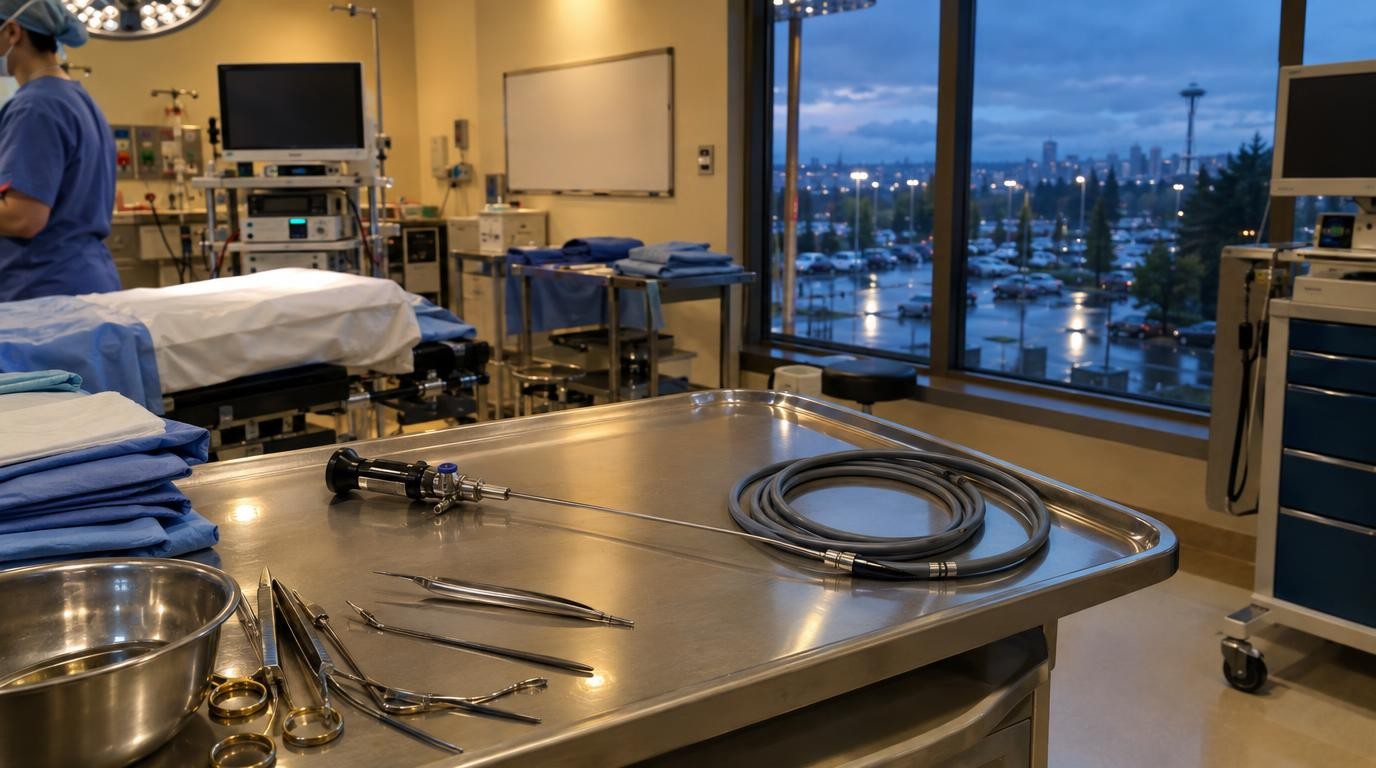
An article by Shruti C. Tannan, MD, FACS, on the American Society of Plastic Surgeons’ website describes three to five separate one-inch scalp incisions behind the hairline for an endoscopic brow lift. A lighted camera called an endoscope lets the surgeon view tissue beneath the skin while repositioning the brow.
What is a surgical brow lift?
A brow lift, also called a forehead lift, raises the soft tissue and skin of the forehead and brow. At La Belle Vie Cosmetics, our brow lifting service includes endoscopic, coronal and hairline techniques. Each uses a different incision and has different implications for the hairline and scarring; the approaches are not interchangeable.
Who might be a candidate for an endoscopic brow lift?
Adults bothered by a low, sagging or uneven brow may consider an endoscopic lift. Hairline position, hair density, the extent of brow drooping and appearance goals can favor an endoscopic or another approach.
At your first visit to La Belle Vie Cosmetics, your surgeon will likely review your medical conditions, medications, allergies and previous surgery. They will likely examine and measure parts of your face with your eyes open and closed and may take photographs for your medical record. This assessment can help distinguish brow droop from concerns centered on the eyelids. If an uneven brow concerns you, our guide to approaches to brow asymmetry may help you prepare for your visit.
Ask which technique suits your brow and hairline, what risks your health history may add, when you can expect to resume your usual activities, and what result is realistic for you.
How does an endoscopic brow lift compare with open techniques?
An endoscopic brow lift uses small incisions behind the hairline, while open approaches use a longer incision across the scalp or along the hairline.
What did the 2026 review find about results and complications?
A 2026 systematic review in Plastic and Reconstructive Surgery – Global Open included 15 studies and suggested comparable or better aesthetic outcomes, fewer complications and shorter recovery times for endoscopic and other minimally invasive approaches as a group than for traditional open approaches. Differences in study design and outcome measures limit those conclusions; stronger prospective evidence is needed to establish long-term results and safety. The review does not establish which technique is best for every patient.
How do coronal and hairline incisions differ?
A coronal incision crosses the scalp behind the hairline, whereas a hairline incision sits at the upper forehead along the hairline. The table compares how these and the endoscopic approach may affect the hairline and where scars may show.
| Technique | Incision and consideration |
|---|---|
| Endoscopic | Several small incisions behind the hairline allow camera-guided lifting and fixation of forehead tissue. |
| Coronal | An incision runs behind the hairline across the scalp. At La Belle Vie Cosmetics, this approach is not typically used for someone with a high hairline, thin hair or likely hair loss. |
| Hairline | An incision follows the edge of the forehead and hairline. It can suit a high or receding hairline without pulling the hairline back, although a scar may remain visible. |
What happens during endoscopic brow lift surgery?
During an endoscopic brow lift, the surgeon views and raises forehead tissue through small incisions behind the hairline. At La Belle Vie Cosmetics, brow lift surgery typically takes about one to two hours.
- The surgeon makes several small incisions behind the hairline.
- An endoscope enters through one incision so the surgeon can see the underlying muscles and tissue.
- An instrument enters through another incision to lift the forehead tissue.
- The surgeon anchors the tissue and closes the incisions with stitches or small clips.
How is the brow secured in its new position?
The lifted tissue may be anchored in its new position with sutures, small screws or another fixation technique.
How long does recovery take after an endoscopic brow lift?
The American Board of Cosmetic Surgery lists four to six weeks as a general full-recovery timeframe for brow lift surgery; your recovery after an endoscopic lift may differ. You may return to work sooner, while restrictions on strenuous exercise may last longer and final results take months to emerge. Bruising and swelling may develop in the first days, swelling may last several weeks, and itching or numbness around healing incisions will likely lessen over time.
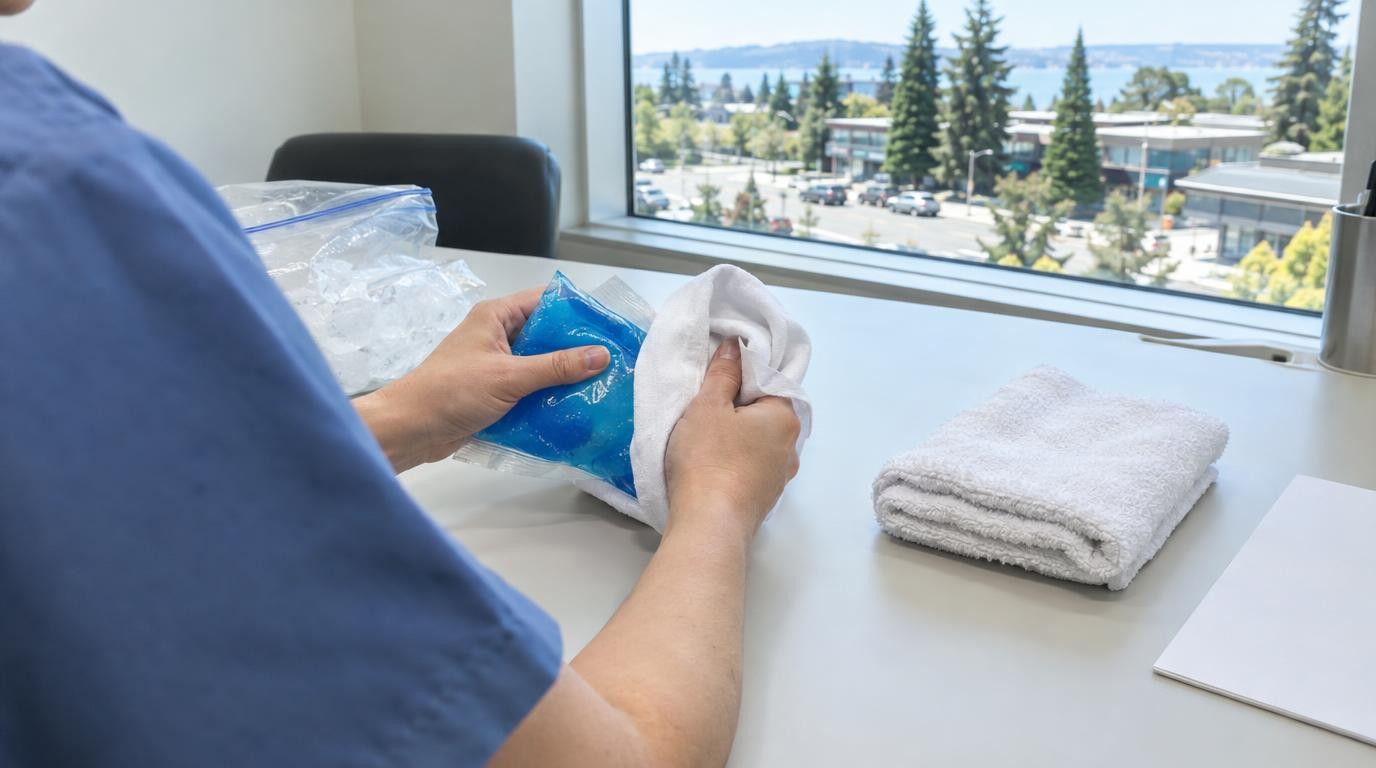
After surgery, the forehead may have a loose wrap to limit swelling, and a small drain may be placed near an incision. La Belle Vie Cosmetics advises patients to rest with the head elevated, take pain medication as recommended, use cold compresses and avoid excessive pressure or movement at the incisions.
When are bandages and stitches usually removed?
At La Belle Vie Cosmetics, bandages, if used, are likely removed in one to three days, and sutures are typically removed within seven to 10 days. Follow the removal schedule your surgeon gives you if it differs.
When can you return to everyday activities?
Shruti C. Tannan, MD, FACS, writes in her article on the American Society of Plastic Surgeons’ website that most patients return to work within a week after an endoscopic brow lift. Tannan’s article says driving may resume in weeks 2 to 3 once pain is controlled without narcotics and mobility returns. Our postoperative instructions cover when to wash and dry your hair and bathe. Incision lines fade over time.
What are the downsides of a brow lift?
A brow lift can cause swelling, bruising, itching or numbness that often lessens over time, and scars whose visibility depends partly on incision placement and healing. Surgical complications are also possible with an endoscopic approach.
The American Society of Plastic Surgeons’ brow lift safety guidance lists risks including bleeding, infection, hair loss near incisions, unfavorable scarring, asymmetry, poor wound healing, facial nerve injury with weakness or paralysis, and anesthesia-related problems. Other possible risks include an elevated hairline, eye irritation or dryness, persistent pain, fluid accumulation, skin loss and the need for revision surgery. Blood clots are a rare but serious risk. The 2026 review’s finding of fewer complications with minimally invasive approaches as a group does not mean an individual operation is risk-free.
A 2018 systematic review in Plastic and Reconstructive Surgery – Global Open found that brow-lift techniques had different complication profiles; among the techniques it examined, the highest reported hair-loss rate was 2.8% for endoscopic brow lifts. That review finding is not an estimate of any one patient’s risk.
Who should postpone or avoid brow lift surgery?
There is no single eligibility rule that replaces a medical assessment. If you have an active infection or a health or anesthesia risk that has not been addressed, you may need to postpone elective surgery until your clinician determines it is safe. If excess eyelid skin, rather than brow droop, is your main concern, a different procedure may be more appropriate because a brow lift does not remove eyelid skin. Your surgeon can assess your health, goals and personal risks with you.
During recovery, contact your surgical team promptly about new facial weakness, bleeding, worsening redness or drainage at an incision. Seek urgent medical care for chest pain or shortness of breath, which could signal a blood clot in the lungs.
How long does an endoscopic brow lift last?
The change in brow position can be long-lasting or even lifelong, but the visible result can change as you age. A Cleveland Clinic guide to brow lifts explains that results may fade with aging. Its comparison of brow and eyelid lifts says it often takes a decade or more for aging to become noticeable again. That is not a guaranteed duration for an endoscopic lift: renewed drooping and sun damage can affect each person’s appearance differently.
What are the nonsurgical alternatives to an endoscopic brow lift?
The 2018 systematic review also identified studies of botulinum toxin injections, fat injections and radiofrequency for nonsurgical brow rejuvenation. The American Academy of Facial Plastic and Reconstructive Surgery notes that injectable neurotoxins can address lines caused by facial movement. Treating those lines is not the same as surgically repositioning a drooping brow. We can discuss which concern matters most to you and what each option may achieve.
Can an endoscopic brow lift be combined with eyelid surgery?
Yes. La Belle Vie Cosmetics offers brow lifting on its own or alongside eyelid surgery, called blepharoplasty, or a face-lift. Combining procedures is not necessary for everyone: a brow lift addresses brow and forehead position, while eyelid surgery addresses concerns centered on the eyelids.
For example, raising a low brow may change the appearance of heaviness above the eye without removing excess eyelid skin. If you are unsure where the heaviness originates, our guide to sagging brows and hooded eyes explains why that distinction matters.
Frequently Asked Questions
What kind of anesthesia is used for an endoscopic brow lift?
General anesthesia or local anesthesia with sedation may be used for an endoscopic brow lift. Your surgical plan determines which approach is appropriate.
Does an endoscopic brow lift remove excess forehead skin?
No. An endoscopic brow lift raises and secures forehead tissue through small incisions, but it does not remove forehead skin. An open approach may trim excess skin.
How is a temporal brow lift different from an endoscopic brow lift?
A temporal brow lift focuses on the outer portion of the brow, while an endoscopic brow lift repositions brow and forehead tissues through several small incisions. A temporal lift uses incisions near the temples and may be performed under local anesthesia. The right approach depends on where your brow has drooped and your goals.
When will I see the final results of an endoscopic brow lift?
In her article on the American Society of Plastic Surgeons’ website, Shruti C. Tannan, MD, FACS, describes final results emerging in months 3 to 6 as scars begin to fade and the brow settles into its new position.
When can I exercise after an endoscopic brow lift?
In her article on the American Society of Plastic Surgeons’ website, Shruti C. Tannan, MD, FACS, says light walking is encouraged in weeks 1 to 2, while strenuous exercise should be avoided through weeks 3 to 4. The article says activity can gradually increase during weeks 6 to 12; strenuous activity may resume by the end of that period if your surgeon permits it.
Will an endoscopic brow lift get rid of forehead wrinkles and frown lines?
An endoscopic brow lift may reduce the appearance of forehead wrinkles and frown lines by repositioning brow and forehead tissues, but it may not significantly improve lines caused by repeated facial movement.
How can patients from Burien discuss an endoscopic brow lift in Seattle?
Patients from Burien can reach our team about an endoscopic brow lift through our online consultation form. Our office is at 16400 Southcenter Pkwy, Suite 101, Tukwila, WA 98188, in the Seattle area.
Dr. Tony Mangubat is La Belle Vie Cosmetics’ board-certified cosmetic surgeon and has more than 20 years of clinical experience. If you are considering a brow lift, contact La Belle Vie Cosmetics in the Seattle area at 206-575-0300 to arrange a consultation with Dr. Mangubat and discuss the approach that may be appropriate for you.
This information is general and is not medical advice. Talk to a licensed clinician about your own situation before making a treatment decision.
