

Last updated: November 15, 2026
Double incision top surgery removes breast tissue and excess skin through paired chest incisions to create a flatter, more masculine contour. It often includes free nipple grafts, which allow the surgeon to resize and reposition the nipples and areolas. At La Belle Vie Cosmetics in Seattle, Washington, our FTM & MTF Chest Reconstruction service includes this approach for patients whose tissue and skin make a smaller-incision technique less suitable.
What is double incision top surgery?
At La Belle Vie Cosmetics, our double-incision approach is a bilateral simple mastectomy with nipple grafts. We generally place the scars near the lower pectoral folds and reduce the areolas to suit the new chest contour.
The American Society of Plastic Surgeons’ procedure guide explains that double incision can remove larger amounts of tissue and skin while shaping a masculine chest contour.
How is top surgery different from a double mastectomy?
A double mastectomy broadly means removing breast tissue from both sides of the chest. Masculinizing top surgery also plans the chest contour, skin position, scar placement, and nipple appearance around the patient’s goals. The terms can overlap, but a mastectomy alone does not specify the contouring or nipple-placement plan.
Who is double incision top surgery best suited for?
Double incision top surgery is generally suited to people with substantial breast tissue or excess skin that a small incision cannot readily address. At La Belle Vie Cosmetics, we consider tissue and skin amount alongside the contour a patient wants, scar preferences, and nipple placement. An examination helps determine which approach is appropriate; neither technique guarantees a particular result.
For someone seeking FTM chest reconstruction or male chest reconstruction, the choice is not simply between a larger and smaller scar. It is also a choice about how much skin can be removed and how freely the nipples can be resized and repositioned.
When might keyhole top surgery be a better option?
When there is minimal breast tissue and excess skin, we may prefer a subcutaneous mastectomy through a small keyhole incision because it leaves less scarring. Keyhole surgery offers less opportunity to reduce or reposition attached nipples and areolas.
What happens during double incision surgery with nipple grafts?
The steps of double incision surgery typically include:
- While you are sitting up, the surgeon marks the planned chest contour.
- Anesthesia options include intravenous sedation and general anesthesia; your surgeon will recommend the appropriate approach for you. After anesthesia is administered, the surgeon makes two horizontal incisions across the chest and removes breast tissue and excess skin.
- The surgeon brings the upper skin down toward the chest fold, shapes the contour, and closes the incisions.
- The nipples and areolas are typically reduced in size and reattached as free grafts in their planned positions.
- Dressings are applied, and the team monitors you as you recover from anesthesia.
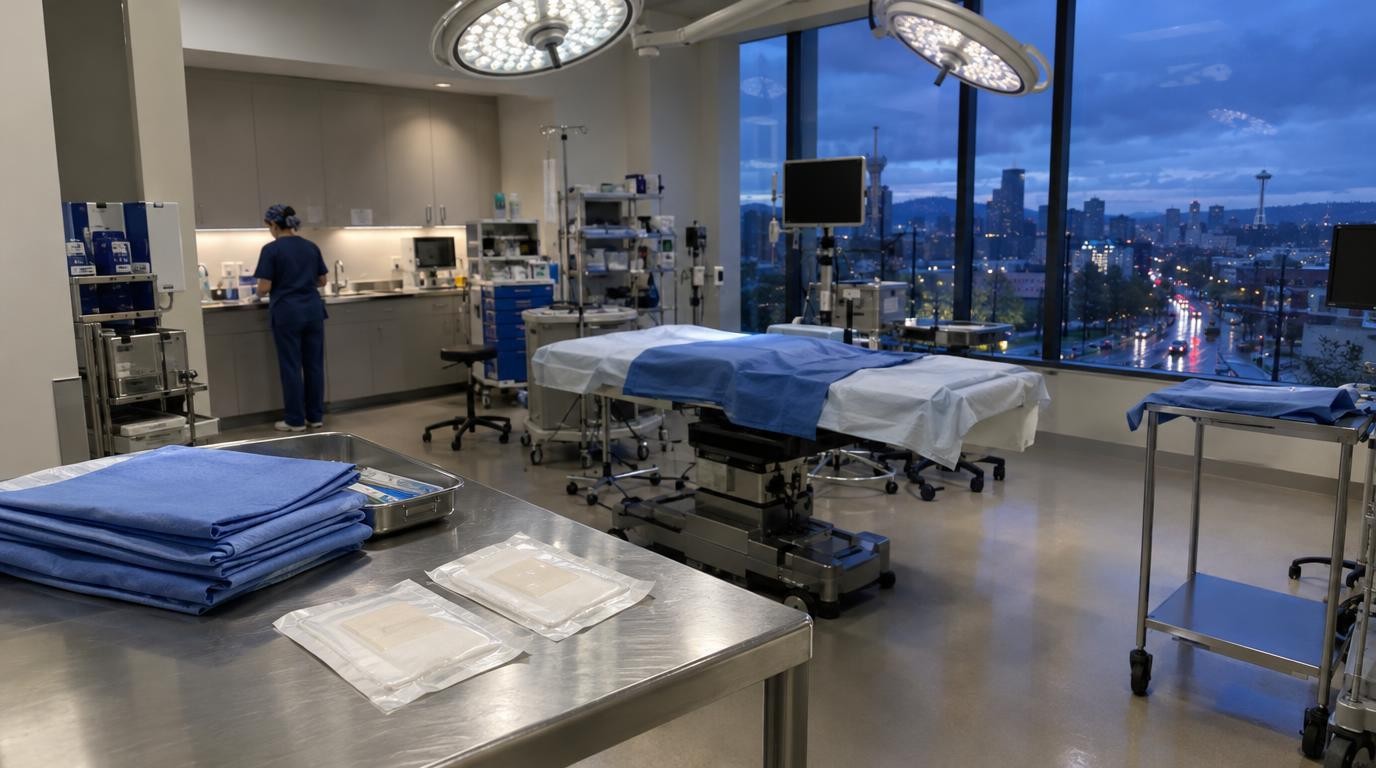
The precise incision shape, graft placement, dressings, and postoperative plan depend on your anatomy and surgical plan.
Why are the nipples resized and repositioned?
The nipples and areolas may be resized and repositioned so their proportions and placement suit the flatter chest contour. A free graft is detached and then reattached in its planned position. That flexibility has a trade-off: nipple appearance and sensation can change, and full sensation may not return. Some surgeons offer other approaches that may preserve more nipple sensation; ask whether any are appropriate for your anatomy and available at La Belle Vie Cosmetics.
Is a mastectomy major surgery?
Yes. Chest masculinization involves anesthesia, tissue removal, wound healing, and postoperative monitoring. We require a trusted adult to take you home and stay with you for the first 24 to 48 hours. Your caregiver must be able to provide physical help if needed and understand English sufficiently to receive and follow our detailed postoperative care instructions.
What do published outcomes tell us about double incision top surgery?
A 2023 institutional study in the Journal of Plastic, Reconstructive & Aesthetic Surgery found that double incision with free nipple grafting was the most frequently used technique in its group. Its findings describe that institution’s patients, not predicted outcomes at La Belle Vie Cosmetics.
The 2023 institutional study reported the following findings:
| Measure | Finding in the 2023 institutional series |
|---|---|
| Study group | 73 consecutive patients and 146 breasts |
| Mean follow-up | 7.9 months |
| Double incision with free nipple grafting | 130 of 146 breasts (89%) |
| Mean tissue resection weight | 524.7 g |
| Concomitant suction-assisted lipectomy | 48 breast-level cases (32.9%, as reported) |
| Revision surgery | 8 breast-level cases (5.4%, as reported) |
| Major complications | 2.7% of breast-level cases, as reported |
The study’s revision and major-complication percentages use breast-level cases, not individual patients. In this retrospective series, concomitant liposuction was associated with a lower revision rate; the association does not establish that liposuction prevented revisions. The follow-up period limits what the study can tell us about longer-term appearance or patient-reported satisfaction.
How often was additional fat contouring used?
Additional fat contouring is not automatic; whether it may help address fullness near the chest edges depends on your anatomy and intended contour.
What can affect the need for revision?
The study does not establish what proportion of its patients needed revision, predict whether you will need one, or report a La Belle Vie Cosmetics revision rate. Healing, anatomy, and the desired contour can all affect whether a patient later considers another procedure.
What risks should you discuss before double incision top surgery?
Double incision top surgery carries risks of bleeding, infection, wound-healing problems, asymmetry, permanent scarring, and possible revision. A free nipple graft can partially or completely fail, and nipple sensation may be reduced or lost. Medical history and anesthesia fitness also matter. Discuss your own risks with a licensed clinician before deciding whether surgery is appropriate.
If an incision becomes red, swollen, and painful or appears to be healing poorly, contact our team as soon as possible for an examination. Seek urgent medical care for heavy bleeding, rapidly increasing chest swelling, chest pain, or difficulty breathing. Keep incisions clean and follow the specific dressing and hygiene instructions provided after surgery.
Who might need additional clearance or a different surgical plan?
We review significant medical history individually and may request additional clearance. At a BMI of 36 or higher, we require a meeting with an anesthesia provider at the preoperative appointment, about 2 weeks before surgery. At a BMI of 45 or higher, our anesthesia and surgery teams decide eligibility case by case. The surgeon and anesthesia team determine whether to proceed, modify the plan, or defer surgery.
How long does recovery take after double incision top surgery?
For recovery, we generally recommend 1 to 2 weeks away from sedentary work, 3 to 4 weeks away from more physical work, and one month before exercise or lifting weights. Increase lifted weight gradually during weeks 5 and 6, following your postoperative instructions. Healing varies, and you will also need help at home and follow-up for dressings and incision checks.
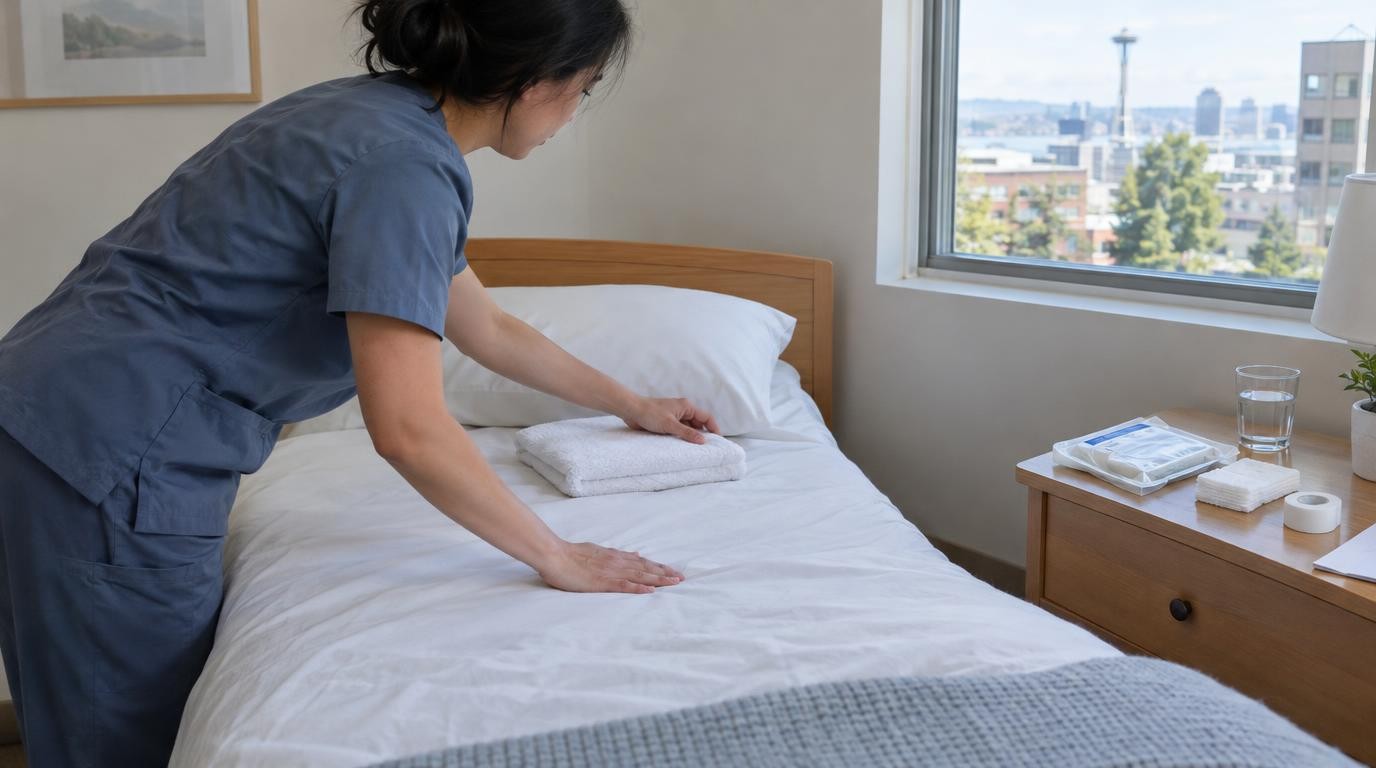
Get enough sleep during recovery and eat a balanced diet that includes fruits, vegetables, and protein to support healing.
Our activity precautions are:
| Activity | Our guidance |
|---|---|
| Reaching and other movements | Refrain from reaching, stretching, pushing, pulling, stooping, running, and other strenuous activities for 2 to 3 weeks to protect the incisions. |
| Lifting over the shoulders | Do not lift more than 10 pounds over the shoulders for 1 month. |
What can affect your return to work and exercise?
A desk-based role may be manageable sooner than work involving lifting, reaching, or sustained physical activity. The benchmarks above are planning guidance, not deadlines: pain, wound healing, and the tasks your job requires can change your return date. Resume exercise according to your postoperative instructions rather than using how energetic you feel as the only test.
What follow-up is needed if you travel for surgery?
Air travel is generally possible once the effects of anesthesia wear off, usually after about 24 to 48 hours. That does not override our requirement that patients traveling from out of state stay locally until all dressings are removed. For chest reconstruction with free nipple grafts, we commonly remove dressings 6 to 7 days after surgery. A complication may require a longer stay; if you fly soon afterward, you may also need someone to help with your luggage.
What results and scars can you expect after double incision top surgery?
Double incision top surgery aims for a flatter, more masculine chest with permanent scars along the lower chest that generally fade over time. Chest shape, scar appearance, nipple healing, and sensation vary between patients.
Early swelling can obscure the eventual contour as your chest heals. The Mayo Clinic’s masculinizing surgery guidance notes that some breast tissue remains after chest surgery, so breast-cancer screening may still be needed based on your history.
Can top surgery be undone?
No, not in the sense of restoring the original chest. Removed breast tissue does not grow back as the original breast, and a free nipple graft may not regain its former sensation. Later surgery can alter chest appearance, but it cannot promise to reverse those changes.
When can scar care begin?
You can begin using silicone sheets or tape once your bandages are removed. Do not use steroid scar treatments during the first 3 weeks after surgery. We assess your incisions at 3 weeks and 3 months and may prescribe a scar gel if needed.
Is double incision top surgery the same as MTF chest reconstruction?
No. Double incision is a chest-masculinizing tissue-removal technique intended to create a flatter contour. Chest feminization pursues a different goal: greater chest fullness, potentially through breast augmentation. La Belle Vie Cosmetics offers both chest reconstruction and breast augmentation, but the appropriate conversation starts with the contour a patient wants, not an assumed identity or pathway.
Frequently Asked Questions
Can I get top surgery if I am under 18?
We do not have a set age limit for top surgery. Dr. Tony Mangubat evaluates adolescents case by case to determine whether surgery is appropriate. For patients under 18, we require at least one parent or legal guardian at the consultation and signatures from all legal parents and/or guardians on surgery consent forms.
Do I need a mental health letter for top surgery?
Yes. At La Belle Vie Cosmetics, you can schedule a consultation without a letter, but we require supporting documentation before surgery. Adults need a referral from a qualified mental health professional. Patients under 18 also need a supporting letter from their primary care provider. The required letters must arrive before your preoperative appointment.
Do I have to stop testosterone before top surgery?
No, you do not need to stop testosterone before surgery at La Belle Vie Cosmetics. We do require estrogen and progesterone to be stopped one full month before surgery. Tell our team about every medication and hormone you take so we can review your individual preoperative instructions; do not change prescribed medication without medical guidance.
Can I sleep on my side after double incision top surgery?
No. At La Belle Vie Cosmetics, we ask you not to sleep on your side or stomach for one month after top surgery. Plan a sleeping setup that helps you avoid rolling onto your incisions. Follow the postoperative instructions we give you, and contact our team if discomfort makes sleeping difficult.
When can I take a bath or use a hot tub after top surgery?
Wait at least one month before taking a bath or using a hot tub, and longer if your incisions still have scabs. At La Belle Vie Cosmetics, we advise against submerging incisions until all scabbing has resolved. Follow your specific wound-care instructions and ask our team before getting into the water if healing is uncertain.
Can my pets sleep in bed with me while I recover from top surgery?
No. At La Belle Vie Cosmetics, we ask you to keep pets out of your bed for two to three weeks after top surgery to help keep the healing area clean. Start with clean bedsheets, wash your hands before touching your incisions, and follow the dressing and hygiene instructions we provide.
When can I return to dancing after top surgery?
We generally recommend waiting 2 to 6 weeks before returning to dancing, depending on how strenuous it is. Follow your individual postoperative restrictions and ask our team if you are unsure when to resume.
How can you decide whether double incision is right for you?
Deciding whether double incision is right for you means weighing the contour you want against your tissue and skin amount, permanent scars, nipple preferences, health history, and recovery needs.
What should you bring up at a Seattle consultation?
Bring questions about the following:
- The chest contour you want and any fullness you particularly want addressed.
- Your preferences about scar placement, nipple size and position, and the possibility of sensation changes.
- Your medical history, medications, and any concerns about anesthesia or healing.
- Who can help at home, what your work requires, and whether travel will affect follow-up.
Is hormone therapy required for top surgery?
We do not require hormone therapy for gender-affirming chest surgery. Some insurers may require it for coverage, however; ask your insurer or our insurance coordinator to check the requirements that apply to you.
If you are considering double incision top surgery, contact La Belle Vie Cosmetics in Seattle, Washington, at 206-575-0300 to arrange a consultation with Dr. Tony Mangubat.
This information is general and is not medical advice. Talk to a licensed clinician about your own situation before making a treatment decision.
