
Last updated: October 25, 2026
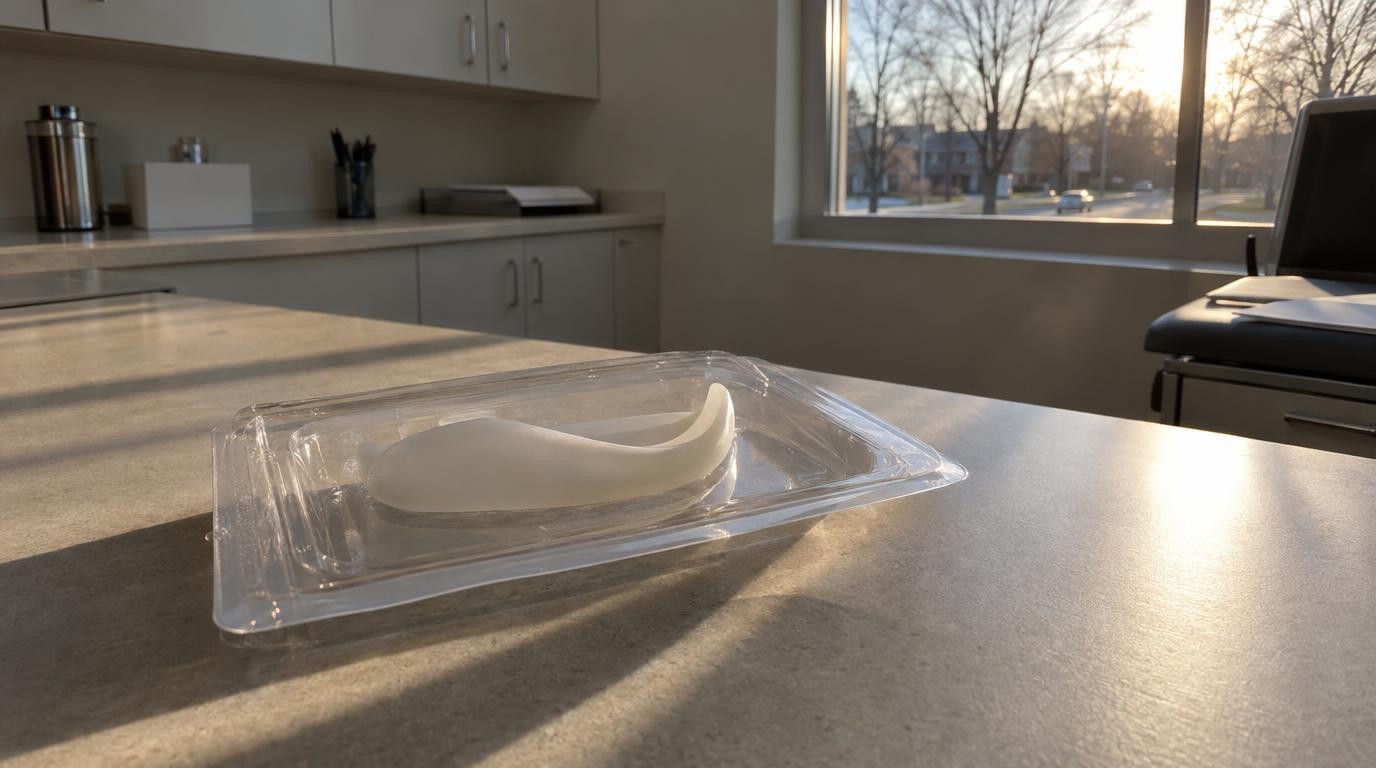
Chin augmentation for men changes chin projection or shape to bring the lower face into better proportion with the rest of the face. At La Belle Vie Cosmetics in Seattle, the treatment offered for this purpose is a surgically placed chin implant. Choosing an implant rather than a bone-moving procedure starts with understanding what each can change.
What is chin augmentation for men, and what can it change?
At La Belle Vie Cosmetics, chin implant surgery places an implant along the existing chin bone. The goal is a contour that suits the individual, not a universal measurement or a change to the entire jaw.
What is the ideal chin for a man?
An ideal result depends on how the chin relates to the nose, jawline, neck and other facial features, as well as the patient’s goals. Daisy Brumby’s article on the American Society of Plastic Surgeons’ site emphasizes proportion and a defined transition between the jaw and neck. A stronger-looking chin does not have to mean the largest or squarest possible chin.
Can a chin implant improve the appearance of a weak jawline?
Yes, when limited chin projection is contributing to a weak-looking jawline. An implant can make the chin more prominent and improve the profile’s apparent definition, but it does not reshape the full length of the jaw or remove loose skin.
How does a chin implant compare with sliding genioplasty for men?
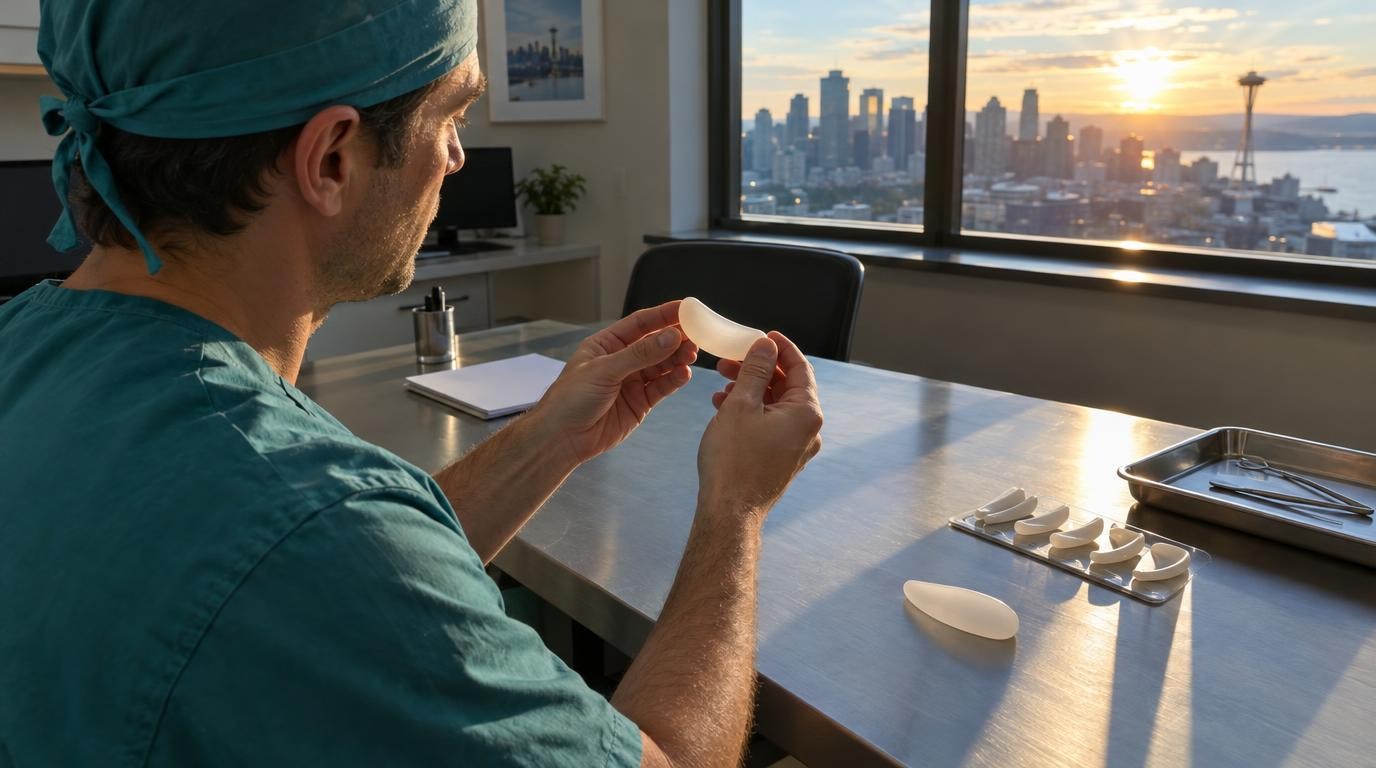
A chin implant sits along the existing chin bone; implant selection can address projection, width or length, depending on your anatomy and intended contour. Sliding genioplasty instead cuts and repositions your own chin bone. Both can address an under-projected chin, but their surgical methods and risks differ.
A 2025 systematic review by Kauke-Navarro and co-authors compared published safety and outcome findings for implant-based augmentation and bone-moving genioplasty. The review found high satisfaction with both approaches and different complication profiles. Its evidence came from single-center studies, so it does not establish that either operation is universally safer or better for every patient.
The review’s scope helps put its conclusions in context:
| Measure | Finding |
|---|---|
| Studies and patients | The 2025 Kauke-Navarro review included 7 studies involving 1,126 patients. |
| Procedures represented | The 2025 Kauke-Navarro review included 740 patients who underwent bone-moving genioplasty and 386 who received implants. |
| Follow-up | Follow-up in the 2025 Kauke-Navarro review ranged from 6 months to 6 years. |
When might moving the chin bone be worth discussing instead of an implant?
A bone-moving evaluation may be worth discussing if you want to set back a prominent chin, move an asymmetric chin sideways or lengthen a short chin. Cleveland Clinic’s explanation of genioplasty describes moving the bone backward or sideways, and its guide to facial implants and chin surgery describes lengthening. Only an individual assessment can determine which approach suits your anatomy.
What other options can add chin definition?
Unlike an implant intended to be permanent, dermal fillers can add chin and jawline definition without surgery but require repeat injections to maintain the effect. Fat grafting transfers your own fat to add volume without an implant; whether it can achieve your desired contour requires an individual assessment.
Who may be a good candidate for a chin implant?
A good chin implant candidate may have a small or recessed chin, want more lower-face definition, and be in good overall health with realistic expectations. Candidacy depends on whether a planned implant contour would address the specific imbalance you see.
How does a consultation assess a recessed chin and facial balance?
Assessment considers chin projection, facial proportions and whether fullness beneath the chin or loose neck skin also contributes to the concern. Dr. Tony Mangubat listens to your goals when assessing whether an implant would address the change you want.
What happens during chin implant surgery at La Belle Vie Cosmetics?
At La Belle Vie Cosmetics, chin implant surgery involves anesthesia, a small incision, and a pocket that holds a biocompatible implant along the chin bone. The implant is selected to suit the patient’s facial structure. Our procedure typically takes about one hour, and patients can usually go home the same day.
- The treatment plan determines whether surgery uses local anesthesia with sedation or general anesthesia.
- The surgeon makes an incision inside the mouth or beneath the chin.
- The surgeon creates a pocket and positions the implant along the chin bone to achieve the planned contour.
Where is the incision for a chin implant?
An incision inside the mouth avoids an external scar but calls for soft foods for several days. An incision beneath the chin may leave a scar that is usually not very noticeable. We plan the incision location alongside implant shape and placement.
What kind of anesthesia is used for chin implant surgery?
Local anesthesia numbs the surgical area while sedation helps you relax; general anesthesia keeps you unconscious during surgery. We use local anesthesia with sedation or general anesthesia, depending on the treatment plan.
How long does recovery from chin implant surgery take?
Chin implant recovery usually begins with mild swelling, tightness or bruising for a few days. The contour refines as swelling settles over the following weeks. Recovery instructions vary with the incision, treatment plan and individual healing.

The American Board of Cosmetic Surgery recommends sleeping face-up with your head elevated for at least 1 to 2 weeks and says strenuous activity can typically resume within 3 to 4 weeks after chin implant surgery.
When can you return to normal activities after a chin implant?
Most people can return to normal activities within one week after chin implant surgery, although some swelling may still be visible. Returning to ordinary activities does not mean you are ready for strenuous exercise; follow your surgeon’s instructions for your own recovery.
How risky are chin implants, and who should avoid surgery?
Chin implant surgery has real risks, including infection, bleeding, implant displacement, asymmetry and altered sensation; revision or implant removal may sometimes be needed. Brief swelling and bruising are expected after surgery, but they are not the same as a complication. Good candidates are generally healthy, have realistic expectations and have finished facial bone growth; a jaw disorder, jawbone deformity or very short chin height may make an implant less suitable, according to Cleveland Clinic.
What complications should you discuss before chin implant surgery?
The 2023 systematic review of chin augmentation techniques examined 54 published studies and reported the following complication rates for its two largest surgical groups. Because the studies included patients selected for different procedures, these figures cannot predict your individual risk or establish a like-for-like comparison.
| Finding | Implants | Bone-cutting procedures |
|---|---|---|
| Overall complications in the 2023 systematic review | 15.7% | 19.7% |
| Temporary chin nerve-related injuries in the 2023 systematic review | 2.4% | 16.4% |
The 2025 Kauke-Navarro review likewise found different risk patterns rather than a risk-free option: infection and wound opening appeared more often in the implant studies, while temporary sensation changes were associated with bone-moving surgery. Seek urgent medical care for trouble breathing or uncontrolled bleeding; promptly contact the surgical team about fever, worsening redness or swelling, drainage, or pain that is increasing rather than improving. Discuss your health, suitability, warning signs and individual risks with your own clinician before surgery.
How long do chin implants last?
Most chin implants are intended to last a lifetime. They do not require routine maintenance, but a complication or new concern can require evaluation, repositioning or removal. Facial trauma can occasionally damage an implant and require replacement.
When will the final chin implant contour be visible?
The final appearance may take 3 to 4 months to become visible as swelling resolves, according to the MedlinePlus chin augmentation guidance. You may notice a change in projection immediately, but the contour continues to refine over the intervening weeks.
How do you plan a chin implant consultation in Seattle?
A productive chin implant consultation starts with the profile change you want and the features you do not want to change. Be ready to discuss implant contour and placement, incision options, anesthesia, recovery needs and risks. If moving the chin bone seems relevant to your goals, ask whether a separate evaluation for sliding genioplasty makes sense.
Could another facial procedure help balance the result?
Rhinoplasty may help when nose proportions affect the profile; neck liposuction may address fullness beneath the chin, and a facelift may address loose tissue. At La Belle Vie Cosmetics, we discuss these options only when they fit your goals; none is an automatic part of chin augmentation.
Frequently Asked Questions
What are chin implants made of?
Chin implants are commonly made of flexible silicone, though other biocompatible materials are also used. At La Belle Vie Cosmetics, we place a biocompatible implant along the chin bone and select its size and contour to suit your facial structure.
Will a chin implant feel like a real chin?
A chin implant generally feels similar to natural chin bone once in place, according to the American Board of Cosmetic Surgery. Sensation can change temporarily during healing: MedlinePlus notes that chin numbness may last up to 3 months and a stretching sensation about 1 week.
Will stitches inside my mouth need to be removed?
Stitches inside the mouth generally dissolve on their own. Stitches beneath the chin may need removal within about a week; our team will tell you which kind you have and when to return.
Can I get a chin implant if I smoke?
Smoking does not automatically rule out a chin implant, but it can delay healing. Cleveland Clinic identifies nonsmokers as ideal candidates, and MedlinePlus notes that smoking can delay healing; tobacco or nicotine use is therefore relevant to candidacy.
Can I get a chin implant if my bite is misaligned?
A misaligned bite does not by itself establish whether a chin implant is appropriate, but an implant will not correct how your teeth meet. Cleveland Clinic identifies normal jaw and tooth alignment as a characteristic of good chin augmentation candidates.
Do I need a ride home after chin implant surgery?
If you receive sedation or general anesthesia, arrange for an adult to drive you home. Do not drive while the medication is affecting you, and follow our team’s instructions for the first day.
Can a chin implant damage the bone underneath?
Yes. Cleveland Clinic lists erosion or resorption of the underlying chin bone as a possible chin implant complication; it is not an inevitable result of having an implant.
What is the next step if you are considering chin augmentation for men?
The next step is to clarify whether an implant can create the chin change you want and whether a bone-moving evaluation would better address your concern. A consultation can bring your goals, anatomy, recovery plans and risk questions together. The right decision is an individualized treatment plan, not a standard masculine chin shape.
If you are considering chin augmentation for men, contact La Belle Vie Cosmetics for a personalized consultation in Seattle with Dr. Tony Mangubat, a board-certified cosmetic surgeon with over 20 years of clinical experience. Our team can discuss whether chin implant surgery fits your goals and answer questions about your proposed plan. Call 206-575-0300 to get started.
This information is general and is not medical advice. Talk to a licensed clinician about your own situation before making a treatment decision.
