
Last updated: October 29, 2026
Scars from tummy tuck surgery form wherever the incisions heal. A full tummy tuck usually leaves a low scar across the abdomen and may leave a scar around the belly button; a mini tuck generally leaves a shorter low scar, while an extended tuck carries the incision farther toward the sides.
Where do tummy tuck scars appear after full, mini, and extended procedures?
According to Cleveland Clinic’s tummy tuck scar guide, a full abdominoplasty generally leaves a low scar from hip bone to hip bone, just above the pubic area, and may also leave a scar around the navel. A mini tummy tuck generally leaves a shorter low scar. The Aesthetic Society’s guide to tummy tuck incisions notes that a mini tuck has no navel incision and that a high-lateral-tension extended tuck leaves a longer scar that may sit higher at the sides. Exact placement depends on anatomy and the surgical plan.
Scar patterns differ by the area of skin being treated:
| Approach | Typical main scar | Belly button scar |
|---|---|---|
| Full tummy tuck | Low across the abdomen, generally hip to hip | Usually present when the navel is repositioned |
| Mini tummy tuck | Low and generally shorter than a full tummy tuck scar | Usually absent because the navel is not repositioned |
| Extended tummy tuck | Low at the front and extending toward the flanks; may sit higher at the sides | Depends on the operative plan |
Does a full tummy tuck leave a scar around the belly button?
Usually, when the belly button is brought through the tightened skin, the surrounding incision heals as a separate scar. The navel scar can look different from the long lower-abdominal scar because it sits in a different location. For more detail about repositioning, see our guide to tummy tuck belly button changes.
Is a mini tummy tuck scar shorter than a full tummy tuck scar?
Generally, yes. A mini tummy tuck treats a more limited area below the belly button. Cleveland Clinic describes its scar as about 3 to 6 inches long, roughly the length of a C-section scar. The Aesthetic Society notes an important exception: a mini-tuck incision can sometimes span the entire abdomen. Your incision length depends on the skin that needs to be removed.
How far does an extended tummy tuck scar reach?
How far the incision reaches depends on how much skin must be removed beyond the front of the abdomen. Ask your surgeon about coverage with your usual swimwear: even if the central scar is covered, the side portions may remain visible.
Which tummy tuck approach matches the changes I want to address?
A mini tummy tuck may suit limited loose skin below the belly button, while a full tuck addresses broader abdominal skin laxity and can include repair of separated muscles. An extended approach may be considered when excess skin reaches the sides. The amount of correction needed, rather than a preference for the shortest scar, guides the choice.
The Mayo Clinic overview of tummy tuck surgery explains that the amount of extra skin removed and the procedure chosen determine incision shape and length. At La Belle Vie Cosmetics, we tailor tummy tuck surgery to each patient’s goals and repair separated abdominal muscles when needed.
Can a mini tummy tuck correct separated abdominal muscles?
Sometimes. A mini tuck may allow repair of limited muscle separation in the lower abdomen, but separation that extends above the belly button may call for a full tuck. Your surgeon needs to assess where the separation occurs rather than choosing a procedure on scar length alone. Our guide to abdominoplasty and diastasis recti explains why that location matters.
Does a full tummy tuck address loose skin above the belly button?
Yes. A full tummy tuck can address loose skin across a wider portion of the abdomen, including above the navel, while tightening the abdominal wall when indicated. Moving the skin into its new position is also why a separate navel incision may be part of the plan.
How does La Belle Vie plan the incision and perform a tummy tuck?
At La Belle Vie Cosmetics, we plan the main tummy tuck incision low on the abdomen, below the bikini line, and tailor muscle repair to the patient’s needs. Dr. Tony Mangubat and Dr. Lena Weinman use a drain-free approach with dissolvable sutures. Contouring treatments may complement surgery, but removing excess skin still requires an incision.
Low placement is intended to improve clothing coverage, though a particular garment may not conceal every part of a healed scar. In clinical practice, incision planning must account for the skin being removed and the resulting tension on the closure, not only where a patient would prefer the scar to sit.
Does a drain-free tummy tuck mean there will be no scar?
No. Drain-free refers to the way the operation is performed without postoperative drainage tubes; it does not mean the skin is left uncut. The incision still has to heal, and a permanent scar remains. Dissolvable sutures also do not prevent scarring.
Do liposuction or Renuvion replace the tummy tuck incision?
No. We often use VASER-assisted liposuction to remove stubborn fat and refine the contour; patients often choose Renuvion tissue tightening for additional skin tightening. Those treatments do not remove the need for an abdominoplasty incision when the plan calls for excising excess skin.
What happens to the incision during tummy tuck recovery?
The incision needs protection while the abdominal tissues heal, even as routine activity gradually resumes. At La Belle Vie Cosmetics, a tummy tuck typically takes 2-4 hours under general anesthesia, and recovery typically lasts 3-6 weeks. Patients wear a surgeon-directed compression garment for several weeks; the scar continues changing well beyond the return to everyday activities.
The Cleveland Clinic overview of abdominoplasty recovery explains that swelling can continue to settle after early recovery and that a scar can keep improving for up to one year. A smoother daily routine therefore does not mean the incision has reached its final appearance. Follow the activity limits given for your own operation, especially those intended to prevent strain on the closure.
How long does early recovery take after a tummy tuck?
La Belle Vie Cosmetics’ typical 3-6-week recovery period involves a gradual return to normal activities, not an automatic clearance for lifting, exercise or every usual task. The extent of surgery and individual healing affect those decisions.
When can I shower or stop wearing a compression garment?
With our drain-free approach, patients can shower just days after surgery once cleared. We typically advise compression-garment use for several weeks, with the wearing schedule adjusted to the surgeon’s instructions. Keep the garment on for the prescribed period rather than stopping when swelling first improves.
Do tummy tuck scars ever fade?
Yes, tummy tuck scars usually become less conspicuous as they mature, but the incision leaves a permanent scar. An early scar may look pink or red and sometimes raised; over time, it often becomes flatter and less noticeable. Skin characteristics, incision tension and healing complications affect the eventual color, texture and visibility.
What does a tummy tuck scar look like after one year?
At one year, many scars are flatter and less prominent than they were early in recovery, but no single appearance applies to everyone. Some scars remain noticeably pink, pale, raised or wide. An appearance at that point is useful to assess, though it is not a guaranteed final result.
Will a healed tummy tuck scar disappear completely?
A small or fine scar may fade completely in appearance after about a year, but most healed tummy tuck scars remain visible to some degree. Concealment beneath clothing is different from the scar disappearing. We can discuss likely placement and the range of healing outcomes, but we cannot promise an invisible scar.
How can I care for a tummy tuck scar while it heals?
Follow the surgical team’s wound-care instructions, wear the prescribed garment and avoid movements that strain the healing incision. Once the incision has healed, sun protection and any approved scar treatment may help limit changes in appearance, but no method can erase a scar.
For the first six weeks after a tummy tuck, Mayo Clinic says you will likely need to be careful with lifting, straining and movements that stress the incision; it advises avoiding sports for at least eight weeks. Cleveland Clinic also advises avoiding sexual activity and stretching the incision until your surgeon says these activities are safe, usually four to eight weeks after surgery. Follow your own surgeon’s clearance rather than treating these timelines as permission to resume activity. Our discussion of silicone scar recovery gel after surgery offers more context about scar products.
When can I use silicone gel or sheets on the incision?
Wait until the wound is fully closed and your surgeon approves silicone gel or sheets. An article on the American Society of Plastic Surgeons’ website notes that surgeons may recommend silicone sheets or gels as part of scar care. If massage is recommended, wait for clearance before putting pressure on the incision.
Does sun protection matter after the incision closes?
Yes. Protecting a healed scar from sun exposure can help avoid a more noticeable difference in color between the scar and surrounding skin. Keep a healing incision covered as instructed; after it has fully healed, protect exposed scar tissue with clothing or sunscreen.
What scar complications are possible, and who should delay a tummy tuck?
Mild itching can accompany healing, but increasing redness, warmth, drainage, fever, worsening pain or an opening incision needs prompt contact with the surgical team. Other possible problems include a widened or thickened scar, infection, fluid collection and delayed wound healing. A published case report of abdominal flap necrosis and wound dehiscence after a tummy tuck documents skin loss and wound breakdown. These problems can worsen the eventual scar and need prompt assessment, although a case report cannot establish how often they occur. Nicotine use, poorly controlled health conditions and difficult past scarring warrant an individual risk review.
A tummy tuck also carries general surgical risks, including blood clots and anesthesia complications. Smoking can increase complication risk, and a condition that affects circulation or wound healing may change whether surgery is appropriate. If you use nicotine, ask your surgeon for a cessation plan before surgery; stopping smoking several weeks beforehand may be part of your preparation. Cleveland Clinic’s tummy tuck candidacy guidance lists being physically healthy and at a stable weight among ideal criteria. Your surgeon may advise waiting until health risks are better managed or your weight is stable, because significant weight changes afterward can affect your result. Discuss your health history and personal risks with your own clinician before making a decision.
Is it normal to experience itching after abdominoplasty?
Some itching near a healing incision can occur as the skin recovers. Itching that accompanies spreading redness, warmth, new drainage or worsening pain deserves assessment rather than an assumption that it is routine healing. Avoid scratching or applying an unapproved product to the incision.
When should I contact my surgeon about a healing incision?
Contact your surgical team promptly if the incision opens, bleeds, develops new or worsening swelling, drains pus or foul-smelling fluid, becomes increasingly red or warm, or is accompanied by fever or worsening pain. Seek urgent medical care for symptoms that could signal a serious complication, such as sudden shortness of breath, chest pain or a newly swollen, painful leg.
How does a tummy tuck scar compare with a C-section scar?
A full tummy tuck generally leaves a longer low-abdominal scar than a C-section and may also leave a scar around the navel. Mayo Clinic explains that a surgeon may be able to incorporate an existing C-section scar into the new tummy tuck scar. This depends on the old scar’s position, the skin available for removal and the operative plan; removal of the old scar or a new incision along exactly the same line is not guaranteed.
Which is harder, a C-section or a tummy tuck?
There is no universal ranking. A tummy tuck can involve removing skin and repairing separated muscles, while a C-section has a different surgical purpose and may occur alongside the physical demands of childbirth. Recovery experiences depend on the person and circumstances, so one patient’s experience cannot predict another’s.
Can a prior C-section scar affect tummy tuck incision planning?
Yes. Tell us about every prior abdominal operation and show your surgeon all your scars, including those that are difficult to see. This gives us a chance to examine how they healed while planning your incision.
Can a prominent tummy tuck scar be revised?
A prominent tummy tuck scar can sometimes be improved with steroid injections, laser resurfacing or surgical revision, depending on the scar. A surgeon first checks for an active healing problem and generally evaluates elective changes after the scar has had time to mature.
The right option depends on whether the concern is redness, thickness, width, discomfort or the scar’s position. Treatments aimed at color or texture differ from a surgical revision of the scar itself. Cleveland Clinic notes that laser resurfacing can cause swelling, blistering or redness, while surgical scar revision can cause infection, bleeding or additional scarring.
When should I ask about a tummy tuck scar revision?
An open or draining wound needs prompt evaluation, not an elective scar-revision appointment. If your incision is fully healed but the scar remains bothersome, ask your surgeon whether and when revision might help. A scar can continue improving for up to one year, so an early appearance may change without revision.
Can revision make a tummy tuck scar invisible?
No. Revision may make a scar less noticeable, but cutting and closing skin produces another scar. The goal and likely tradeoffs should be clear before deciding whether treatment is worthwhile.
What should I ask at a Seattle tummy tuck consultation about scars?
Ask which surgical approach fits your skin and muscle changes, where the main incision and any navel incision would sit, and how existing scars affect the plan. Bring the clothing you hope will cover the scar, describe past healing problems and ask for your specific recovery and scar-care instructions.
For a practical discussion, bring these questions:
- Which areas of loose skin or muscle separation need correction, and how does that affect incision length?
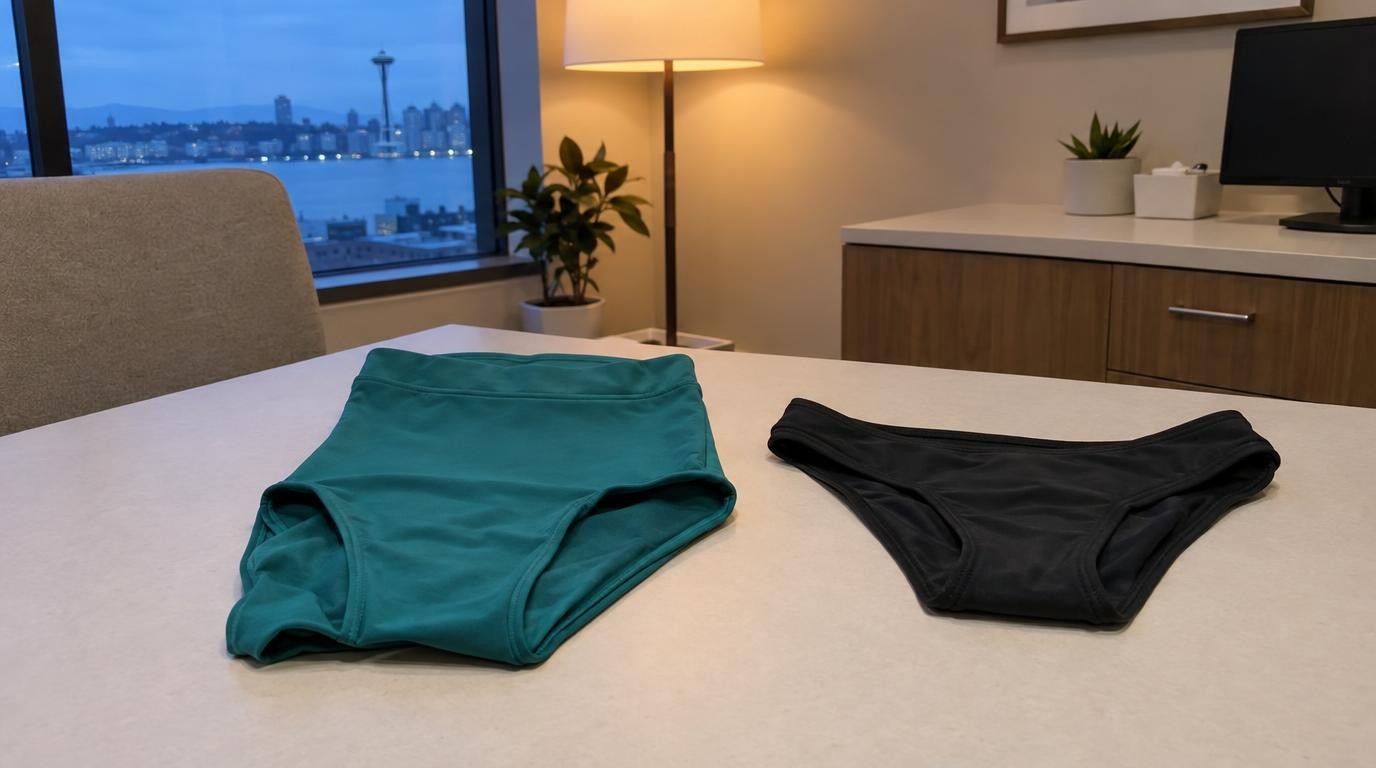
- Where would the incision sit beneath my usual underwear or swimwear?
- Would my existing abdominal scars change the placement or plan?
- What wound-care, garment and activity instructions would apply to me?
- Which changes in my incision should prompt me to contact the team?
Can my surgeon show where my incision would sit under my usual clothing?
Yes. Showing Dr. Tony Mangubat or Dr. Lena Weinman the garments you commonly wear can make a discussion of low incision placement more concrete. The planned line remains an estimate until the surgical plan accounts for your anatomy and the skin to be removed.
What should I mention about past scars or healing problems?
Mention prior abdominal surgery, scars that became raised or wide, wound-healing difficulties, nicotine use and health conditions that may affect recovery. These details help your surgeon assess risks and explain what scar care may look like for you.
Frequently Asked Questions
Does a fleur-de-lis tummy tuck leave a vertical scar?
Yes. A fleur-de-lis tummy tuck leaves a horizontal abdominal scar and a second vertical scar running from the lower breastbone to the pubic bone. According to Cleveland Clinic, this approach is usually considered for substantial excess skin after major weight loss or multiple pregnancies.
Can a tummy tuck remove stretch marks?
Yes, but only stretch marks on skin that is removed. A tummy tuck may remove marked skin from the lower abdomen, below the belly button, according to Mayo Clinic. Stretch marks on skin that remains will not be removed.
Can a tummy tuck scar be indented?
Yes. Cleveland Clinic notes that a tummy tuck scar can be recessed rather than raised. If an indentation concerns you after the incision has healed, ask your surgeon to assess it before choosing a scar treatment.
When can I go back to work after a tummy tuck?
Many patients return to work after two to three weeks, according to the American Board of Cosmetic Surgery. At La Belle Vie Cosmetics, recovery typically lasts three to six weeks. Your return date depends on your healing and job duties; desk work and physically demanding work may require different plans.
How long can numbness last after a tummy tuck?
An article on the American Society of Plastic Surgeons’ website notes that numbness can last for weeks or months after a tummy tuck and often fades with time. It does not mean the scar has finished maturing. Tell your surgical team if numbness concerns you, particularly if it comes with severe pain or other new symptoms.
Can laser treatment help a tight or itchy tummy tuck scar?
Laser treatment may reduce tightness, itching or irritation around a tummy tuck scar, but it cannot guarantee an invisible scar. Cleveland Clinic notes that laser resurfacing is usually reserved for abnormal scarring and can cause redness, swelling or blistering.
What is the next step if tummy tuck scarring concerns me?
If you are considering tummy tuck surgery in the Seattle area, contact La Belle Vie Cosmetics to schedule a consultation with Dr. Tony Mangubat or Dr. Lena Weinman. Call 206-575-0300 to discuss your goals, existing scars and questions about incision placement with our team.
This information is general and is not medical advice. Talk to a licensed clinician about your own situation before making a treatment decision.
