
Last updated: October 11, 2026
A dog ear after top surgery is a protrusion or puckering of skin, sometimes with underlying tissue, at the end of an incision. Scar-end fullness may change as healing progresses, but a bulge that persists deserves an examination. If you are planning surgery, incision-end contour is worth discussing alongside the technique described on our FTM and MTF chest reconstruction service page.
What Is a Dog Ear After Top Surgery?
A dog ear is a raised fold or bulge where a surgical incision ends; the term has nothing to do with an animal’s ear. An early bump may instead reflect healing-related swelling, so its appearance alone does not establish whether the contour will persist.
If you mean surgery on a dog’s ear canal, that is an unrelated veterinary procedure. Ask a veterinarian for an individual estimate.
What is a dog ear skin flap?
“Dog ear skin flap” is a common search phrase for tissue that projects beside a scar. It does not necessarily mean the surgeon created a surgical flap. In reconstruction, a flap has a different meaning: the National Cancer Institute’s definition of a free flap describes tissue moved from another part of the body with blood vessels that are reconnected at the new site.
Is it normal to have dog ears after breast surgery?
Scar-end fullness can be noticeable during healing after breast or chest surgery, but not every early bulge is a lasting dog ear. The useful question is whether the contour changes as swelling settles or remains bothersome after the incision has healed. An examination can distinguish a persistent fold from other causes of fullness more reliably than a photograph.
Why Do Dog Ears Form at Top Surgery Incisions?
Dog ears form when skin or underlying tissue gathers near the end of an incision during closure. Removing an ellipse of tissue creates a geometric challenge: the edges must meet while the remaining chest skin lies smoothly. Swelling can also make a scar end look full early in recovery, and a dog ear does not automatically mean surgery was performed incorrectly.
Why can tissue gather at the end of a double-incision scar?
During double-incision top surgery, the surgeon removes breast tissue and excess skin, then brings the remaining skin edges together. At the outer end of a long incision, differences in skin length, thickness, and tension can leave a small projection. Planning where the incision ends and how the surrounding tissue will settle helps address that risk, but chest anatomy varies from person to person.
How Do Double-Incision and Keyhole Top Surgery Affect Scar Ends?
Double-incision and keyhole top surgery use different openings because they address different amounts of skin and breast tissue. At La Belle Vie Cosmetics, substantial excess skin and tissue commonly call for double-incision surgery with nipple grafts, while minimal excess may suit a small keyhole incision. Neither approach guarantees a perfectly smooth contour during or after healing. Learn how periareolar top surgery and double-incision surgery differ and which anatomical factors may guide the choice.
Who is better suited to double-incision surgery with nipple grafts?
Our double-incision approach is a bilateral simple mastectomy with nipple grafts, commonly used when there is substantial excess skin and breast tissue. The permanent scars are generally placed along the lower pectoral fold and can fade with time. Because those incisions have distinct ends, scar placement and the transition into the surrounding chest are part of the surgical plan.
When might a keyhole incision be an option?
When excess skin and breast tissue are minimal, we may prefer subcutaneous mastectomy through a small keyhole incision. The smaller opening leaves less scarring, but it also offers less opportunity to remove excess skin. Technique selection depends on an examination of the chest and the contour the patient hopes to achieve, not scar length alone.
How Can Surgeons Reduce the Risk of Dog Ears During Top Surgery?
To reduce the chance of bunching at a scar end, surgeons can consider how much skin and underlying tissue to remove, where the incision will end, and how the skin edges will meet. During closure, a surgeon can reassess fullness at each end and, when appropriate, adjust tissue removal or extend the incision to smooth the transition into the surrounding chest. An extension means a longer permanent scar, and no plan can guarantee that a dog ear or later revision will be avoided. The prevention study below concerns breast reductions and lifts, not masculinizing top surgery.

What did the published “5 D’s” dog-ear study find?
The 2023 Eplasty retrospective review of the “5 D’s” approach examined steps intended to prevent dog ears at the lower ends of incisions in short-scar vertical breast reductions and lifts. The findings below describe outcomes in those patients, not in people undergoing top surgery. They do not establish that this approach prevents dog ears after chest reconstruction, and we do not present it as our clinic’s protocol.
The review’s reported figures are specific to its breast-reduction and breast-lift patients:
| Source and population | Reported finding |
|---|---|
| Eplasty retrospective review of vertical breast reductions and lifts | The Eplasty review included 58 patients and 89 breasts, with a mean follow-up of 10.5 months. |
| Eplasty retrospective review of vertical breast reductions and lifts | One patient (1.7%) developed dog ears on both breasts (2.2% of breasts). That patient did not request revision, and the authors reported no revisions in their reviewed cases. |
What should I ask my surgeon about incision-end planning?
Ask how much skin and tissue need to be removed, where each incision is likely to end, and how the closure will meet the surrounding chest. It is also reasonable to ask how the team assesses swelling during follow-up and what evaluation would be appropriate if a contour concern remains. In clinical practice, planning for the whole chest contour is more useful than treating a scar end as an isolated point.
How Can I Tell Early Swelling From a Persistent Dog Ear?
At your three-week and three-month postoperative visits, compare how a scar-end bulge looks and feels as swelling settles. A projection that remains as recovery progresses needs an in-person assessment rather than a judgment from a photograph. For new or worsening symptoms, follow the warning-sign guidance below instead of waiting for the next visit.
When should I ask my surgeon to examine a scar-end bulge?
Dr. Tony Mangubat evaluates your incisions at those appointments. Let us know when you first noticed the bulge and whether its size or shape has changed. If it remains bothersome, ask when another contour evaluation would be appropriate.
What Are the Risks, and Who Needs Extra Evaluation Before Surgery?
Top surgery and a later revision can involve bleeding, infection, wound-healing problems, asymmetry, permanent scars, and anesthesia complications, including adverse reactions. With double-incision surgery using nipple grafts, a graft can fail to heal in part or completely and may require further care. A dog ear is primarily a contour concern; the percentage reported in the breast-reduction and breast-lift study above is not an estimate of how often dog ears occur after top surgery. Your health and the planned procedure affect your personal risks, so discuss them with your surgeon and anesthesia team.
Which incision symptoms need prompt medical attention?
Our recovery guidance identifies incisions becoming red, swollen, and painful as possible signs of infection and advises examination as soon as possible. Contact the surgical team promptly if those changes develop or worsen. Seek urgent medical care for severe symptoms such as difficulty breathing or rapidly worsening chest swelling. A contour concern without those warning signs still merits assessment, but it is a different question from an acute wound problem.
Who may need additional medical or anesthesia clearance?
Dr. Tony Mangubat reviews significant medical history to determine whether additional medical clearance is needed. Our anesthesia assessment thresholds guide individual decisions; they are not universal exclusions:
| La Belle Vie Cosmetics assessment threshold | What happens |
|---|---|
| La Belle Vie Cosmetics: BMI of 36 or higher | We arrange an assessment with an anesthesia provider at the preoperative appointment, about two weeks before surgery. |
| La Belle Vie Cosmetics: BMI of 45 or higher | La Belle Vie Cosmetics determines anesthesia and surgery eligibility case by case. |
The amount and distribution of tissue can also affect contour planning. A published abstract on masculinizing chest reconstruction associated higher BMI with a greater likelihood of dog ears at intermediate follow-up. Its authors described dog ears as largely aesthetic, without additional safety concerns, and cautioned against excluding patients on BMI alone. Individual assessment remains essential.
How Can a Persistent Dog Ear Be Corrected?
A persistent dog ear can be evaluated for revision once the surgeon can distinguish lasting excess tissue from changes still occurring during healing. A commonly used correction removes a small ellipse of tissue at the scar end and closes the area. That may alter or lengthen the scar, and suitability and likely results depend on an examination.
Can a dog ear improve without revision surgery?
A bulge caused partly by swelling may become less noticeable as recovery progresses. Persistent excess skin or tissue is less likely to resolve through scar care alone. Silicone products can support scar care when appropriate, but they do not remove a structural projection. The decision about revision is best made after the contour can be assessed in person.
What might surgical dog-ear revision involve?
A surgeon may remove a small ellipse around the projecting tissue and close the revised scar end. The incision may need to extend farther to create a smoother transition, so revision trades one contour concern for a change in scar shape or length. The precise approach, timing, and recovery instructions depend on the tissue involved and the patient’s health; this description does not imply that La Belle Vie Cosmetics offers a specific dog-ear revision procedure.
What Does Recovery Involve After Top Surgery or a Revision?
Top surgery recovery involves incision care, activity limits, and follow-up while the chest heals. A separate revision, if performed, requires its own aftercare plan rather than an assumed repeat of the original timeline.
When can I begin silicone scar care after top surgery?
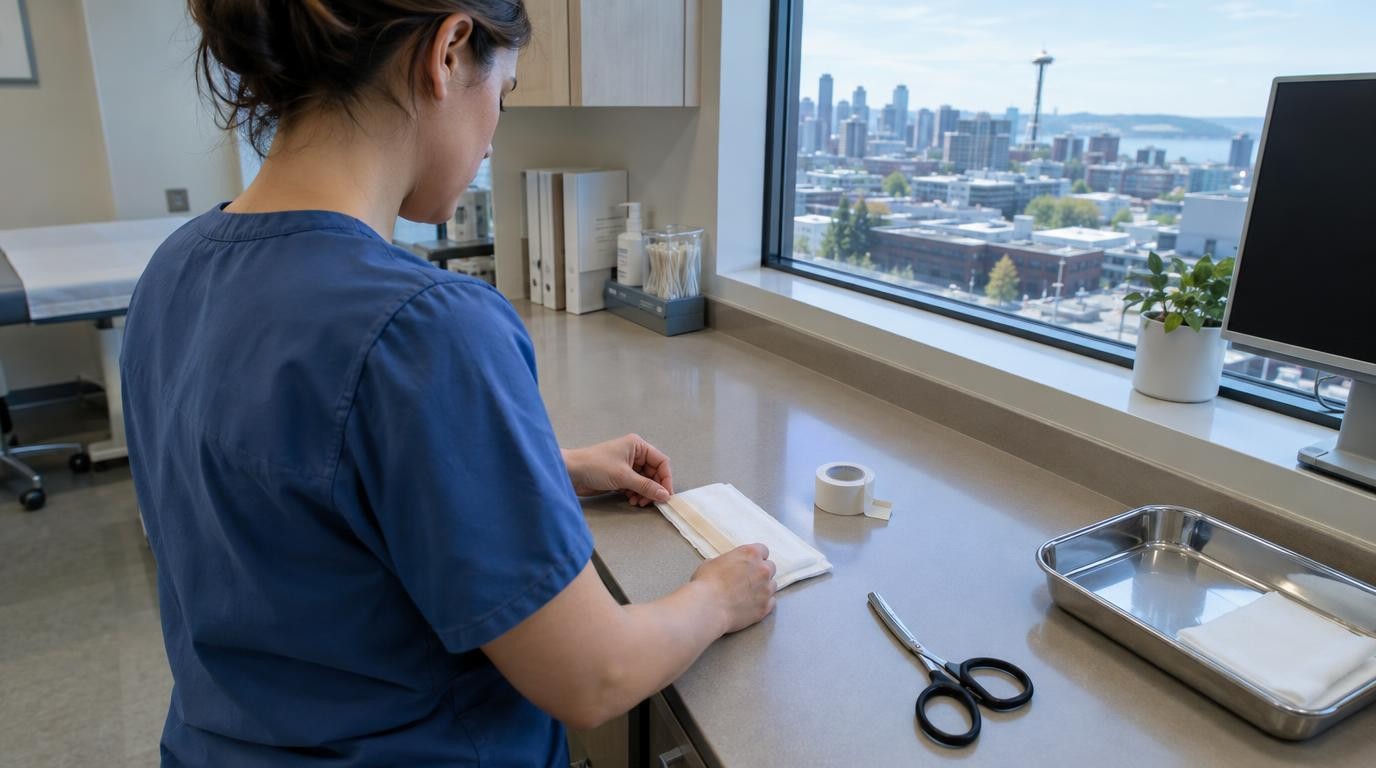
At La Belle Vie Cosmetics, patients can start silicone sheets or tape once bandages are removed. We advise avoiding steroid scar treatments for the first three weeks to prevent weakening scars before they have healed. After evaluating your incisions, Dr. Mangubat may prescribe a compounded scar gel if needed. Follow the instructions given for your own incisions if healing changes that plan.
How long should I limit lifting and strenuous activity?
La Belle Vie Cosmetics gives the following general top surgery recovery guidance; individual instructions may differ:
| La Belle Vie Cosmetics guidance | Timeframe |
|---|---|
| La Belle Vie Cosmetics: do not lift more than 10 pounds over your shoulders | La Belle Vie Cosmetics: one month after surgery |
| La Belle Vie Cosmetics: avoid reaching, stretching, pushing, pulling, stooping, running, and other strenuous activity | La Belle Vie Cosmetics: two to three weeks after surgery |
| La Belle Vie Cosmetics: time away from sedentary work | La Belle Vie Cosmetics: generally one to two weeks |
| La Belle Vie Cosmetics: time away from more active work or work requiring regular lifting of more than 10 pounds or lifting over the shoulders | La Belle Vie Cosmetics: generally three to four weeks |
Recovery varies with the procedure and the demands of a job. If a revision is performed, use the aftercare and activity limits provided for that operation rather than assuming the top surgery schedule applies.
Frequently Asked Questions
Are dogs under anesthesia for ear cropping?
Ear cropping is a veterinary procedure, not a correction for a scar-end dog ear after top surgery. When performed by a veterinarian, it is generally done under general anesthesia. Ask a veterinarian about an individual dog’s care.
Can a dog ear revision after top surgery be done with local anesthesia?
Sometimes, a small dog ear correction can be performed while you are awake under local anesthesia, but that is not guaranteed for top surgery revisions. In an answer published on the American Society of Plastic Surgeons website, a surgeon discusses local anesthesia for dog-ear correction and flank liposuction after a tummy tuck. Your surgeon must assess the chest tissue and your health before choosing anesthesia.
Can I have a dog ear revised while taking blood thinners?
A dog ear revision may need to wait if you take blood thinners because they increase bleeding risk. In an answer published on the American Society of Plastic Surgeons website, a surgeon advised a patient taking blood thinners after a pulmonary embolism to postpone elective dog-ear revision until the blood thinners could safely be stopped. Do not stop prescribed blood thinners on your own – ask your prescribing clinician and surgeon to coordinate.
Can I sleep on my side if I have a bulge at the end of my top surgery scar?
No – at La Belle Vie Cosmetics, we instruct patients not to sleep on their side or stomach for the first month after top surgery, whether or not a scar-end bulge is visible. Follow your individual postoperative instructions, and ask your surgical team if discomfort or swelling makes it difficult to find a comfortable sleeping position.
Can I soak a top surgery dog ear in a bath or hot tub?
No – at La Belle Vie Cosmetics, we advise against hot tubs, hot baths, and submerging top surgery incisions for at least one month or until all scabbing has resolved. Soaking will not remove excess tissue forming a dog ear. If a scar-end bulge persists, ask your surgeon to examine it rather than trying to soften it by soaking.
When can I start lifting weights again after top surgery?
At La Belle Vie Cosmetics, we generally recommend waiting one month before returning to exercise or weightlifting, then gradually increasing the weight during weeks five and six. Early activity can strain healing incisions, including their ends. Your surgeon may adjust that schedule based on how you are healing; a separate dog ear revision would require its own activity instructions.
Can I fly home after top surgery if my dressings are still on?
Most patients can fly once the effects of anesthesia have worn off, generally about 24 to 48 hours after surgery, but we require out-of-state patients to stay locally until their postoperative dressings are removed. We commonly remove dressings six to seven days after chest reconstruction with free nipple grafts, or at the three- to four-day visit without grafts. Complications may require a longer stay.
Do I need someone to stay with me after top surgery?
Yes – at La Belle Vie Cosmetics, we require a trusted adult to pick you up and stay with you for the first 24 to 48 hours after top surgery. Your caregiver receives postoperative instructions, must understand English well enough to follow them, and must be able to provide physical help if needed. Arrange that support in advance, especially if you are traveling for surgery.
What Should I Discuss at a Seattle Top Surgery Consultation?
A top surgery consultation should connect your skin and tissue anatomy with an incision plan, realistic contour expectations, and a follow-up plan. At La Belle Vie Cosmetics in Seattle, Washington, Dr. Tony Mangubat examines individual anatomy and discusses surgical goals.
How will my skin and tissue affect technique selection?
Ask whether the amount of skin and breast tissue present makes our double-incision approach or a keyhole incision more appropriate. Discuss where scars are likely to sit, whether nipple grafts are part of the plan, and how the incision ends will transition into the surrounding chest. Dr. Mangubat’s examination helps make those questions specific to your anatomy rather than relying on photographs of another patient’s results.
What is the plan if a scar-end bulge persists?
Ask which healing changes should prompt an earlier examination and how a lasting bulge would be evaluated after recovery. If you are considering top surgery or have a scar-end concern, contact La Belle Vie Cosmetics in Seattle, Washington, to arrange a consultation with Dr. Tony Mangubat, MD. Our team can discuss chest reconstruction options and follow-up planning with you at 206-575-0300.
This information is general and is not medical advice. Talk to a licensed clinician about your own situation before making a treatment decision.
