
Last updated: October 9, 2026
With a typical full tummy tuck, your original belly button generally stays attached to the abdominal wall while the surrounding skin is moved and a new opening is made for the navel. The belly button after a tummy tuck may look different because its visible shape depends on the new opening, the surrounding tissue and how the area heals. Our tummy tuck surgery at La Belle Vie Cosmetics can also address excess abdominal skin and separated muscles, when present.
What happens to your belly button during a tummy tuck?
The American Society of Plastic Surgeons’ procedure description lays out the sequence for a full tummy tuck:
- A low incision allows the surgeon to lift the abdominal skin and repair the weakened abdominal wall if needed.
- The upper abdominal skin is pulled down, and excess skin is removed.
- The retained navel is brought through an opening in the moved skin and sutured into place.
Can you keep your own belly button with a tummy tuck?
Usually, yes. A new opening in the skin does not mean a new navel is constructed: a standard full tummy tuck generally preserves and re-exposes your own belly button.
Does a tummy tuck change your belly button?
Yes. Although a full tummy tuck usually preserves the original navel, the new skin opening can alter its visible position, outline and depth. The appearance of the surrounding scar can also change as it heals.
What does a good belly button look like after a tummy tuck?
A natural-looking tummy tuck belly button is generally proportionate to the abdomen, gently inset and surrounded by a scar that is as inconspicuous as healing allows. No single shape suits every person. Existing anatomy, incision design, tissue handling and individual scar formation all influence how the navel eventually looks.
How do incision placement and tissue handling affect the result?
In a full tummy tuck, the surgeon typically makes an incision in the skin around the navel and secures it within a new opening in the moved abdominal skin. The opening’s design affects the visible outline; the way surrounding tissue is handled affects how inset the navel appears. A tummy tuck belly button scar can remain visible even with careful planning.
What does the 2021 umbilicoplasty study add to this discussion?
The 2021 peer-reviewed article “Umbilicoplasty in Abdominoplasty: Modifications for Improved Aesthetic Results” describes a half-moon design and removal of fat around the navel as the authors’ preferred approach to umbilicoplasty in abdominoplasty. The authors report aesthetically pleasing results with their preferred technique; their experience does not guarantee how another patient’s navel will look.
Can a mini tummy tuck leave your belly button unchanged?
A mini tummy tuck treats tissue below the navel and usually does not require a new opening for it, according to an article on the American Society of Plastic Surgeons’ website. A full tummy tuck treats the area above as well as below the navel and often requires such an opening. Neither approach guarantees that the navel’s appearance will remain exactly the same.
Some patients with extensive excess skin may be considered for a fleur-de-lis tummy tuck, which also repositions the belly button, as noted in the American Society of Plastic Surgeons’ overview of tummy tuck types.
Who might need a full tummy tuck instead of a mini tummy tuck?
Loose skin or muscle separation extending above the belly button can favor a full tummy tuck because a mini tummy tuck is limited to the lower abdomen. As Mayo Clinic’s tummy tuck guide explains, lasting stitches can tighten the fascia—the connective tissue over the abdominal muscles—and bring separated muscles closer together to address a bulge. Removing excess skin addresses loose tissue. Our guide to abdominoplasty and diastasis recti covers tummy tucks and muscle separation.
What happens during a tummy tuck at La Belle Vie Cosmetics?
At La Belle Vie Cosmetics, we make a low abdominal incision, remove excess skin and fat, and repair separated abdominal muscles when needed. We often use VASER-assisted liposuction to contour areas of excess fat and perform drain-free tummy tucks without postoperative drainage tubes. Navel opening and scar placement depend on your anatomy and surgical plan. Our guide to a tummy tuck for apron belly compares approaches for removing excess lower-abdominal skin.
At La Belle Vie Cosmetics, our tummy tuck typically takes 2-4 hours under general anesthesia; the time for an individual operation depends on its scope. We place the lower incision below the bikini line so the scar can usually be covered by clothing or swimwear.
What should you ask about navel placement before surgery?
Ask whether your plan requires an incision around your navel and, if so, where the navel will emerge through the moved skin. Ask where the lower and navel scars would fall and how your skin laxity, existing scars and anatomy affect those choices. The American Society of Plastic Surgeons’ tummy tuck guide notes that a full tummy tuck typically leaves a scar from hip bone to hip bone and around the navel; the amount of excess skin affects the lower incision’s length. At La Belle Vie Cosmetics, Dr. Tony Mangubat, MD, our board-certified cosmetic surgeon, and Dr. Lena Weinman plan incisions with your anatomy in mind.
How does your belly button heal after a tummy tuck?
A healing navel incision may look more prominent than it will after the scar settles; early photographs or mirror checks cannot establish its final shape.

The American Society of Plastic Surgeons’ tummy tuck results page notes that swelling and an initial inability to stand fully upright can obscure the result until internal healing is complete.
How long can the contouring results last?
At La Belle Vie Cosmetics, we describe tummy tuck results as long-lasting, but neither your abdominal contour nor the skin around your navel is guaranteed to stay unchanged. Later weight changes or pregnancy can alter the contour. Being at or near your goal weight before surgery helps set realistic expectations for your result.
How long does tummy tuck recovery usually take?
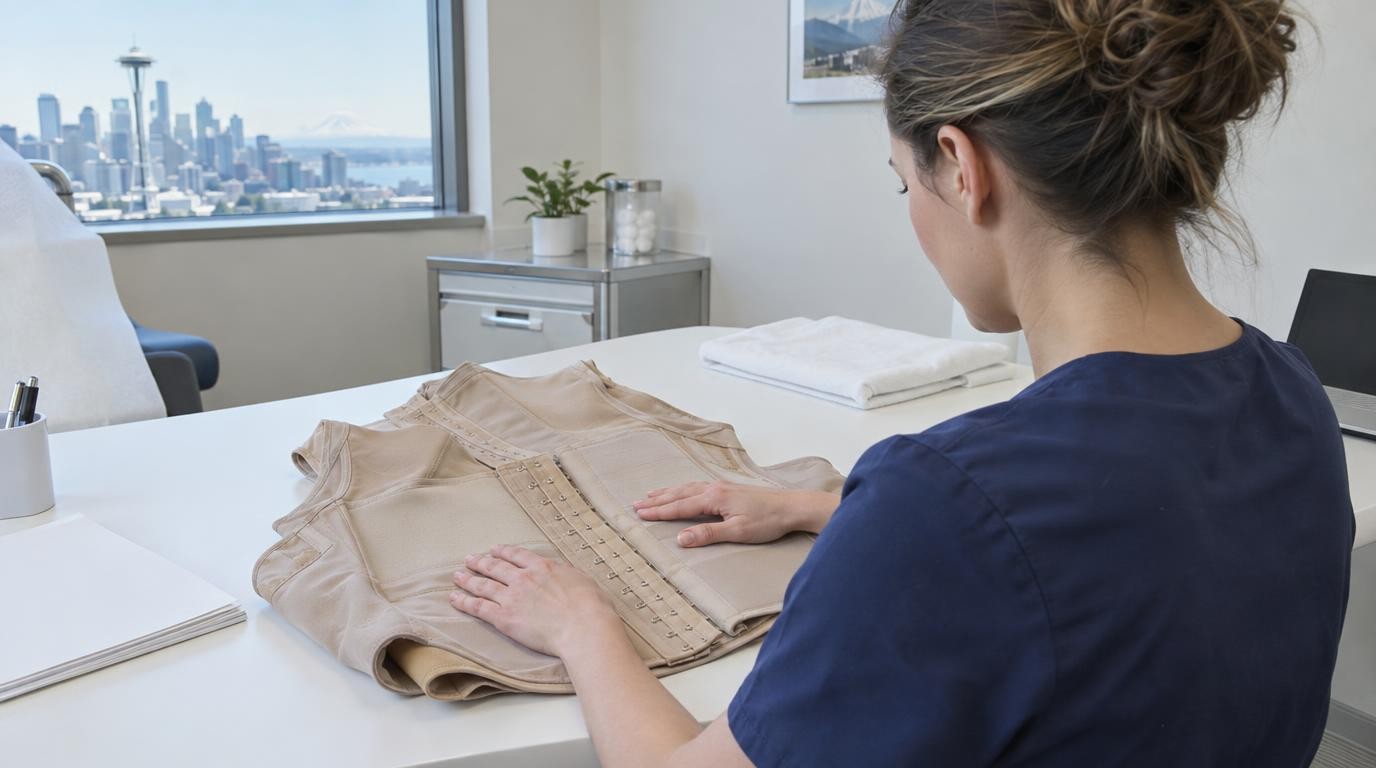
At La Belle Vie Cosmetics, we typically advise wearing a compression garment for several weeks. With our drain-free approach, patients may be cleared to shower within days, but they should follow their surgeon’s specific instructions. Expect some pain and limited activity in the first week. Some people can resume most usual activities around week four, but timing varies; our typical recovery period is 3-6 weeks. For more about the approach, see our guide to drain-free surgery.
How can you tell if someone has had a tummy tuck?
A low abdominal scar and, after a full tummy tuck, a scar near the navel may suggest surgery, but appearance alone cannot reliably tell you whether someone has had a tummy tuck. Scar visibility and belly button shape vary with incision design, anatomy, clothing and the way each person heals.
A scar may be concealed by underwear or swimwear, but “concealed” does not mean invisible. The navel scar may become less noticeable as it heals, or it may remain apparent. Neither an especially natural-looking navel nor a visible scar, by itself, proves which procedure a person had.
What risks can affect belly button healing, and who should wait?
Swelling is common after a tummy tuck. A scar along the lower incision is expected, as is a scar around the navel if an incision is made there. Other possible effects or complications include changes in sensation or navel shape, infection, delayed wound healing, reduced blood supply to tissue, fluid collection and risks associated with general anesthesia. Their likelihood varies with your health and surgical plan, so ask us about your individual risks. Drain-free surgery does not eliminate complications. Smoking, uncontrolled medical conditions, unstable weight or plans for another pregnancy deserve an individualized discussion and may favor postponing surgery.
Blood clots are also a surgical risk. Discuss any history of healing problems, medical conditions, weight changes or future pregnancy plans with your own clinician to decide whether surgery should wait.
Which changes should you report to your surgeon during recovery?
Contact your surgical team promptly about worsening redness, pus-like drainage, fever, increasing pain or a concerning change in the navel’s color. Seek urgent medical care for chest pain, difficulty breathing, heavy bleeding or new one-sided leg swelling or pain. Follow the contact and after-hours instructions your surgical team gives you.
Frequently Asked Questions
Will a tummy tuck remove stretch marks near my belly button?
It may remove stretch marks on skin excised from the lower abdomen below the belly button. Marks on skin that remains, including those above or beside the navel, may still be visible.
Can my C-section scar be removed during a tummy tuck?
Possibly. A C-section scar can sometimes be incorporated into the new lower-abdominal tummy tuck scar rather than remain a separate scar. Whether that is possible depends on the location of your existing scar and the planned incision.
What if I have a bulge at my belly button before surgery?
A bulge at the navel can have several causes, including an umbilical hernia. Tell us about it before surgery so we can examine it and discuss whether it changes your treatment plan; do not assume a tummy tuck will treat a hernia.
How soon should I walk after a tummy tuck?
Mayo Clinic says your surgery team may help you start walking as early as the first day after a tummy tuck to lower blood-clot risk. Keep your walks gentle and follow your surgeon’s instructions as your incisions heal.
When can I return to work after a tummy tuck?
The American Society of Plastic Surgeons notes that some patients can return to work and light daily activities in week 2. Your timing depends on your job’s physical demands and the extent of surgery; ask us what restrictions apply to your work.
Can a tummy tuck treat loose skin that extends around my back?
Yes. When loose skin extends toward the back, Cleveland Clinic’s tummy tuck page describes circumferential abdominoplasty, which lengthens the abdominal incision toward the back. If the plan also includes a full abdominal tuck, it typically requires an opening around the navel.
What should you ask at a tummy tuck consultation?
- Would a full or mini tummy tuck better address the loose skin above or below my belly button?
- What should I plan for before returning to work, exercise or lifting?
- Do I have muscle separation that needs repair, and would liposuction change my contouring plan?
- What incision-care and after-hours contact instructions apply to my recovery?
If you are traveling from Shoreline, Washington, to discuss abdominal contouring, La Belle Vie Cosmetics in Seattle can help you understand the options without assuming a particular technique or result is guaranteed. Contact La Belle Vie Cosmetics at 206-575-0300 to arrange a consultation with Dr. Tony Mangubat, MD, or Dr. Lena Weinman and talk through your anatomy, navel concerns and goals.
This information is general and is not medical advice. Talk to a licensed clinician about your own situation before making a treatment decision.
